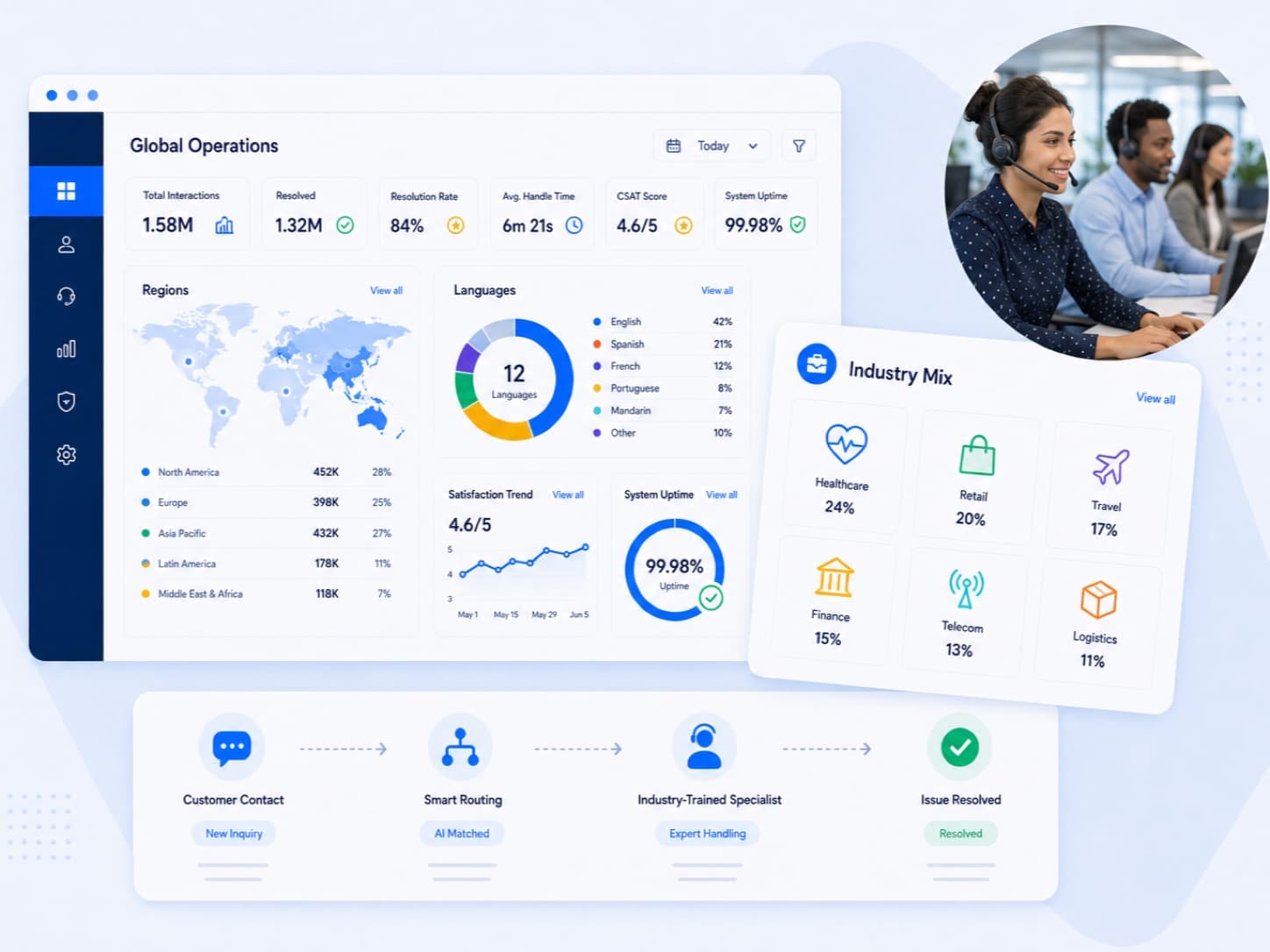

How startups build customer support with limited resources, why early support is a growth lever not a cost, and when to keep it in-house versus outsource it.
Early support is a growth lever disguised as a cost
A startup has few customers, little money and no time, and customer support can feel like an overhead to minimise until the business is bigger. That framing is a mistake, because early support is one of the highest-leverage things a startup does: the first customers are the ones who become references, case studies and word of mouth, and the intense, personal support a startup can give them builds the loyalty and reputation that fund growth. Customer support for a startup is not a cost to defer; it is a growth lever to use while the business is still small enough to use it fully.
The startup's advantage is that it can offer support no big company can — direct access to the people who built the product, genuine care about every customer, fast iteration on feedback — and squandering that advantage by neglecting support is throwing away one of the few edges a small company has.
Founders doing support is a feature, then a bottleneck
In the earliest days, founders doing their own support is not just necessary but valuable: it puts the people who make the decisions in direct contact with the customers, which surfaces product insight and builds relationships nothing else can. But it does not scale, and there is a point where founders doing support stops being a feature and becomes a bottleneck that keeps them from building the company. Recognising that transition — capturing the insight and relationships of founder-led support and then moving beyond it before it strangles the founders' time — is one of the key early support decisions.
Support is product feedback at a startup
For a startup still finding product-market fit, support is the richest source of product feedback there is: every contact is a customer telling you what is confusing, missing or broken, at the moment it matters. A startup that treats support as a feedback channel into the product, not just a queue to clear, learns faster than one that does not, and that learning is often more valuable than the support itself. Building support so the insight flows to the product team is a startup-specific priority that a bigger company can afford to be sloppier about.

When to outsource, and when not to
The startup's dilemma is that it cannot afford a big support team but cannot afford bad support either, and outsourcing can resolve it — providing professional coverage and capacity a tiny team cannot, at a cost that scales with use. The judgement is about timing and scope: very early, when support is founder-led product discovery, keeping it in-house is usually right; as volume grows and the support becomes more repeatable, outsourcing the routine while keeping the high-insight contacts close is often the smart move. Outsourcing lets a startup punch above its weight on support without a headcount it cannot yet justify.
Getting it right
Treat early support as a growth lever, capture the product insight it generates, use founder-led support and then move beyond it, and outsource the routine as you grow to punch above your weight. Our small business outsourcing guide covers the version for small firms, and the scaling guide covers what comes as the startup grows.
Frequently asked questions
Should a startup invest in customer support early?
Yes — early support is a growth lever disguised as a cost. A startup's first customers become its references, case studies and word of mouth, and the intense, personal support a startup can give them builds the loyalty and reputation that fund growth. A startup can offer support no big company can — direct access to the builders, genuine care, fast iteration on feedback — and squandering that by neglecting support throws away one of the few edges a small company has. Support is not a cost to defer until the business is bigger; it is an advantage to use while it is still small.
Should founders do their own support?
In the earliest days, yes, and it is valuable — it puts the people who make decisions in direct contact with customers, surfacing product insight and building relationships nothing else can. But it does not scale, and there is a point where founder-led support stops being a feature and becomes a bottleneck that keeps founders from building the company. The key decision is recognising that transition: capturing the insight and relationships of founder-led support, then moving beyond it before it strangles the founders' time, rather than clinging to it too long.
Why is support important for a startup's product?
Because for a startup still finding product-market fit, support is the richest source of product feedback there is — every contact is a customer telling you what is confusing, missing or broken, at the moment it matters. A startup that treats support as a feedback channel into the product, not just a queue to clear, learns faster than one that does not, and that learning is often more valuable than the support itself. Building support so the insight flows to the product team is a startup-specific priority that a bigger company can afford to be sloppier about.
When should a startup outsource support?
It is a matter of timing and scope. Very early, when support is founder-led product discovery, keeping it in-house is usually right. As volume grows and the support becomes more repeatable, outsourcing the routine while keeping the high-insight contacts close is often the smart move. Outsourcing resolves the startup dilemma — cannot afford a big team, cannot afford bad support — by providing professional coverage and capacity a tiny team cannot, at a cost that scales with use, letting a startup punch above its weight without a headcount it cannot yet justify.