
KPIs & CX Analytics
Key Performance Indicators
Turning call center data into actionable insights that improve efficiency, customer satisfaction, and business performance.
What Are Call Center KPIs?
Key Performance Indicators (KPIs) are measurable values used to evaluate how effectively a call center, team, or individual is achieving business objectives.
They provide a 360-degree view of customer interactions by combining telephony data, operational metrics, and performance analytics.
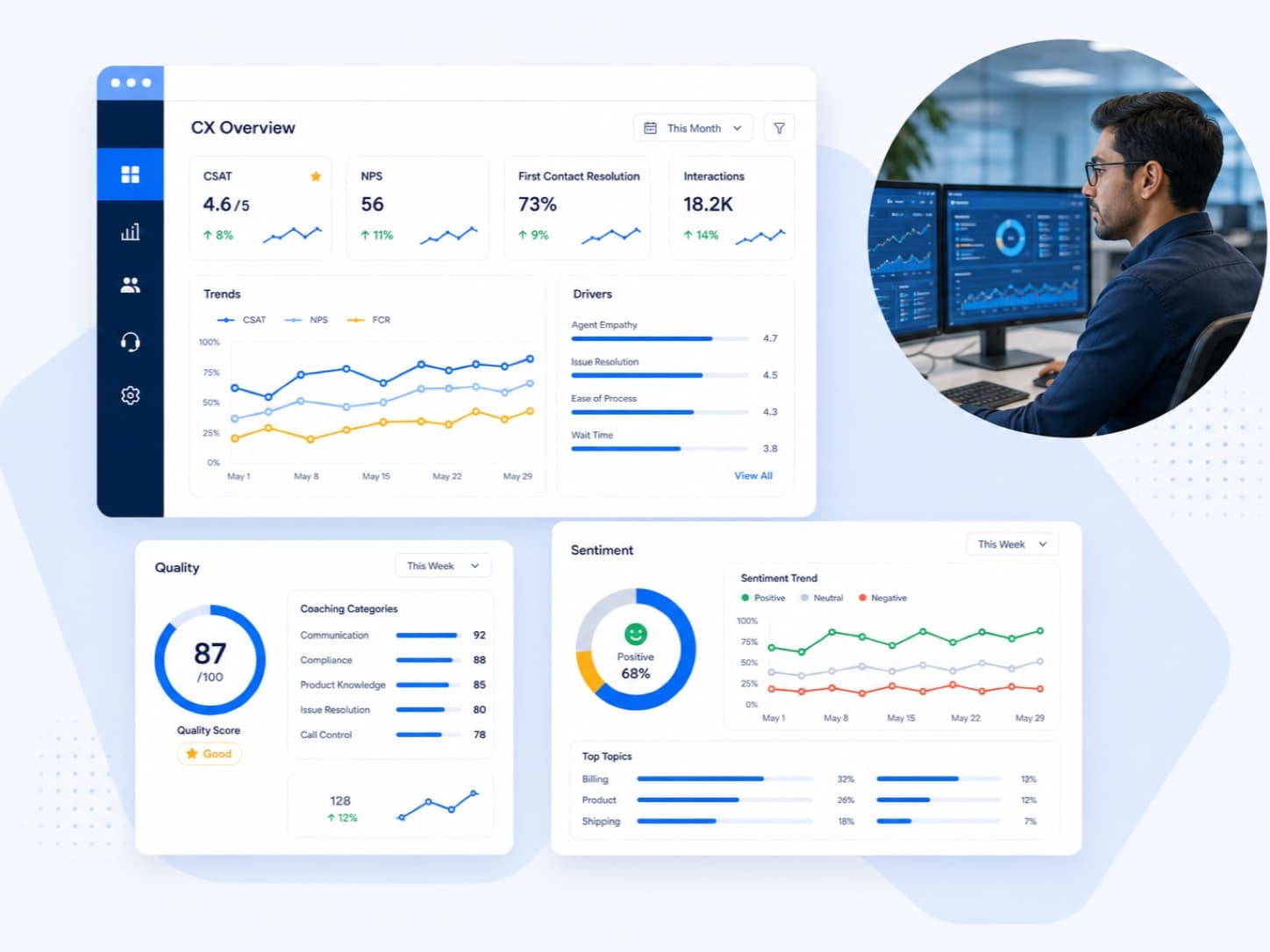
Why KPIs Matter
KPIs help organizations improve agent performance, reduce costs, optimize customer experience, and make confident, data-driven decisions.
They also enable benchmarking against industry standards and tracking progress toward strategic goals.

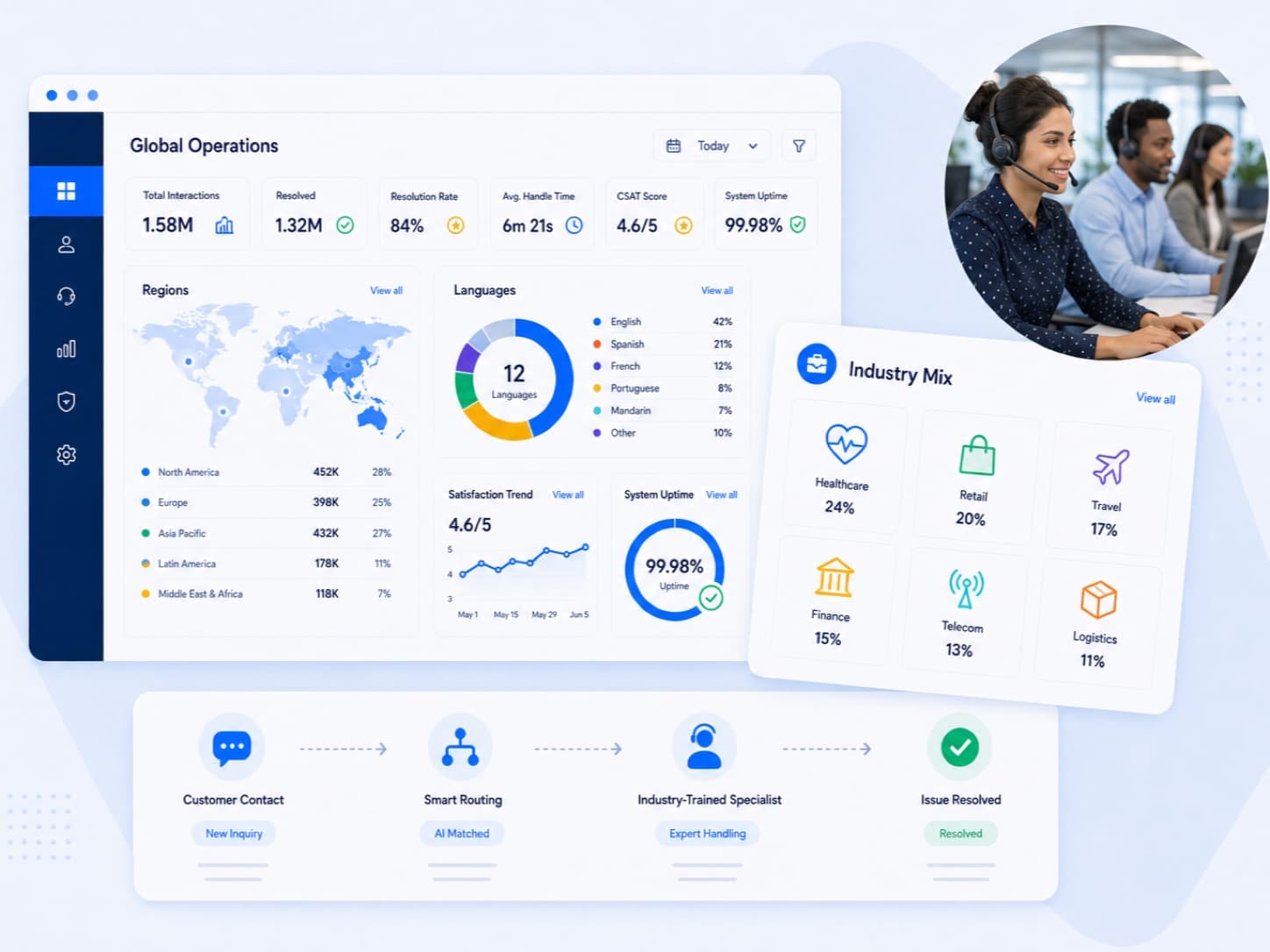
How Call Center KPIs Shape Data-Driven Decisions
The first step to making data-driven decisions in the call center is to develop a comprehensive understanding of what a call center KPI is, as well as how they are used in the call center.
There are many KPI goals for a call center. Some of these KPIs are captured in the phone system, others require additional systems or processes to collect data, and others require that you marry up the data from multiple systems to give you a holistic picture. They typically assess the performance of the agent, team, department and/or the call center as a whole. They can be used to determine trends and make data-driven decisions that will increase efficiency, optimize customer satisfaction, increase revenue and reduce costs. They can also be used in benchmarking efforts to measure progress towards goals and to compare the call center’s performance with an industry standard. Taken together, call center KPIs are metrics that provide information about how a call center is performing and can be used as a foundation to make strategic decisions that will help to drive results.
Anyone working in a call center knows how critical they are to a successful organization. However, many companies don’t know how to determine which Key Performance Indicators (KPIs) they need to focus on. We have created this list to help call center professionals identify where to focus to maximize the value of their data.
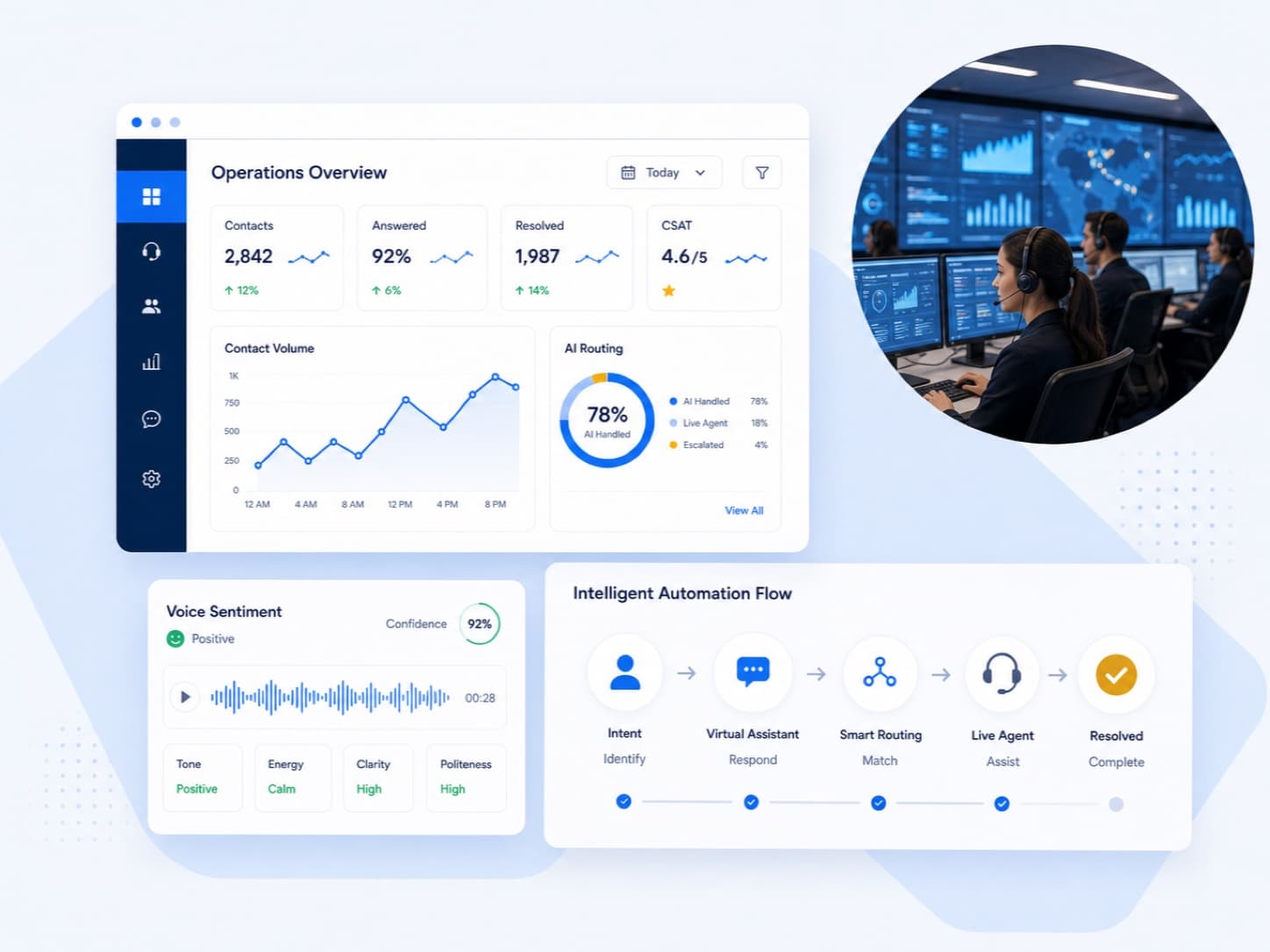
Call Center KPIs That Mislead, and What to Read Instead
Every KPI can be improved in a way that makes the service worse, and a few are especially prone to it. Average handle time falls when agents rush customers off the phone, and the unresolved problems return as repeat calls. Service level rises when a center answers quickly and then parks callers on hold, or when abandoned calls are excluded from the calculation. Occupancy looks efficient in the nineties and produces burnout, errors and resignations. First-contact resolution reported by the agent at wrap-up is nearly always higher than the rate customers would report. None of these measures is wrong. Each is incomplete on its own, and each needs a counterweight.
Pairing is the practical answer. Read handle time with repeat contact and quality. Read service level with abandonment and with the longest wait, by interval rather than as a daily average. Read occupancy with attrition and absence. Read first-contact resolution as measured from your data — did the same customer contact you again about the same issue within seven days — and not only as self-reported. Read sales conversion with cancellation and complaint rates. A scorecard built from pairs is much harder to game, and it gives an agent no incentive to serve the metric at the customer's expense.
It also helps to separate the measures you manage by from the measures you are judged by. Operational indicators such as adherence, handle time and occupancy are levers for supervisors; they belong in daily management. Outcome indicators — resolution, customer satisfaction, retention, revenue, cost per resolved issue — are what the business cares about, and they belong in the contract and the executive review. Mixing the two is how contact centers end up contractually committed to a handle-time target that everyone knows is working against the result they actually want.
- Every KPI needs a counterweight: handle time with repeat contact, service level with abandonment
- Measure first-contact resolution from repeat-contact data, not agent self-report
- Read by interval, not only as a daily or monthly average
- Keep operational levers in daily management and outcomes in the contract
KPI Coverage Areas
Agent-Level Metrics
Individual productivity, quality, adherence, and efficiency.
Team & Department Metrics
Workload balance, collaboration, service consistency, and outcomes.
Contact Center Metrics
Overall performance, scalability, service levels, and customer satisfaction.
Business Impact Metrics
Revenue growth, cost reduction, retention, and ROI.
Frequently asked questions
What are the most important call center KPIs?
For most programs: service level and abandonment for accessibility, first-contact resolution and repeat contact for effectiveness, quality score and customer satisfaction for experience, and cost per resolved contact for efficiency. Sales programs add conversion and revenue per hour.
What is a good service level for a call center?
A common target is 80% of calls answered within 20 seconds, but the right figure depends on what your customers will tolerate and what the contact is worth. Emergency and sales lines usually need tighter targets; general enquiries can often accept looser ones at noticeably lower cost.
How is first-contact resolution measured?
Most reliably by checking whether the same customer made contact again about the same issue within a set window, typically seven days. Agent-recorded resolution and post-contact surveys are useful supplements but tend to overstate it.
What is the difference between a KPI and a metric?
A metric is anything that is measured. A KPI is a metric chosen because it indicates progress towards an objective the business has set, with a target and an owner. A contact center has hundreds of metrics and should have only a handful of KPIs.
How often should KPIs be reviewed?
Operational indicators are watched by interval and daily. Performance against targets is reviewed weekly and monthly. The choice of KPIs themselves should be revisited at least annually, since a target that was right at launch may be driving the wrong behavior two years later.
Common KPI Terminology
A reference list of widely used call center and CX performance terms.
- ACD — Automatic Call Distributor
- ACW — After Call Work
- AES — Agent Effort Score
- AHT — Average Handle Time
- ANI — Automatic Number Identification
- API — Application Program Interface
- ART — Average Resolution Time
- ASA — Average Speed of Answer
- ASAT — Agent Satisfaction Score
- ASP — Application Service Provider
- ASR — Automatic Speech Recognition
- ATA — Average Time of Abandonment
- ATR — Agent Turnover Rate
- AWT — Average Wait Time
- BC/DR — Business Continuity/Disaster Recovery
- BCP — Business Continuity Planning
- BI — Business Intelligence
- BIC — Best-in-Class
- BPO — Business Process Outsourcing
- CC — Call Center
- CCaaS — Contact Center as a Service
- CCR — Customer Controlled Routing
- CDP — Customer Data Platform
- CDR — Call Detail Recording
- CED — Caller Entered Digits
- CEM — Customer Experience Management
- CES — Customer Effort Score
- CI — Conversational Intelligence
- CIS — Customer Information System
- CLI — Calling Line Identity
- CLV — Customer Lifetime Value
- CMS — Call Management System
- CPC — Cost Per Call
- CRM — Customer Relationship Management
- CSAT — Customer Satisfaction Score
- CSR — Customer Service Representative
- CTI — Computer Telephony Integration
- CX — Customer Experience
- DID — Direct Inward Dialing
- DNIS — Dialed Number Identification Service
- DSL — Digital Subscriber Line
- EAI — Enterprise Application Integration
- ERMS — Email Response Management System
- ERP — Enterprise Resource Planning
- EWT — Expected Wait Time
- EX — Employee Experience
- FCR — First Call Resolution
- FCRR — First Call Resolution Rate
- FRT — First Response Time
- FTE — Full Time Equivalent
- GenAI — Generative Artificial Intelligence
- GOS — Grade of Service
- INS — Intelligent Network Service
- ISDN — Integrated Services Digital Network
- ISP — Internet Service Provider
- IVR — Interactive Voice Response
- IXC — Interexchange Carrier
- KB — Knowledge Base
- KM — Knowledge Management
- KPI — Key Performance Indicator
- LAN — Local Area Network
- LLM — Large Language Model
- LOA — Least Occupied Agent
- MIA — Most Idle Agent
- MMR — Multimedia Routing
- NLP — Natural Language Processing
- NLU — Natural Language Understanding
- NPS — Net Promoter Score
- NSP — Network Service Provider
- OAM — Operations, Administration and Maintenance
- OJT — On the Job Training
- OPA — Off Phone Activity
- OSI — Open System Interconnector
- PABX — Private Automatic Branch Exchange
- PBX — Private Branch Exchange
- PCP — Post Call Processing
- PDA — Personal Digital Assistant
- PSTN — Public Switched Telephone Network
- QA — Quality Assurance
- QM — Quality Monitoring
- QoS — Quality of Service
- RFI — Request for Information
- RFP — Request for Proposal
- RNA — Ring No Answer
- ROI — Return on Investment
- RPA — Robotic Process Automation
- SA — Speech Analytics
- SaaS — Software as a Service
- SBR — Skill-Based Routing
- SFA — Salesforce Automation
- SIP — Session Initiation Protocol
- SL — Service Level
- SLA — Service Level Agreement
- SOW — Statement of Work
- TAPI — Telephony Applications Programming Interface
- TCO — Total Cost of Ownership
- TTS — Text to Speech
- UC — Unified Communications
- UCaaS — Unified Communications as a Service
- UCD — Uniform Call Distributor
- VA — Virtual Agent
- VoC — Voice of the Customer
- VoIP — Voice Over Internet Protocol
- VPN — Virtual Private Network
- VRU — Voice Response Unit
- WAN — Wide Area Network
- WFM — Workforce Management
- WFO — Workforce Optimization
Powering Operational Excellence with Data-Driven CX
Let’s build a KPI program that improves customer experience, reduces cost, and increases performance.