

Abandonment is usually read as a staffing problem and is often a design problem. The levers that work, in the order they are worth trying, and the one metric that hides the damage.
Abandonment is the honest half of service level
Service level counts the calls you answered in time. Abandonment counts the people who gave up waiting. A center can hold a respectable service level while a meaningful share of callers hang up, because the ones who abandon quickly stop counting against the target — which is why the two numbers must always be read together.
Those callers do not disappear. They call back later, which inflates your volume, or they call someone else, which does not show up in your reporting at all.
Find out where in the wait they leave
Before changing anything, look at the distribution of abandonment against wait time. It usually falls into one of three shapes, and each points at a different fix.
- Very early abandons, in the first few seconds. These are often misdials, or callers hitting an IVR they did not expect. Adding agents fixes none of it.
- A steady bleed across the queue. This is genuinely a capacity or scheduling problem.
- A cliff at a specific point — frequently around the ninety-second to two-minute mark. That is patience running out, and it responds to queue design rather than headcount.

The levers, in order of cost
Fix the IVR first. It is free and it is frequently the problem. Long menus, options that do not match the reasons people call, and a forced menu when there is only one real destination all generate early abandons and misroutes. Listen to your own menu as a caller with a real problem.
Set expectations honestly. An accurate estimated wait time reduces abandonment because uncertainty is what people abandon, not waiting. An inaccurate one increases it, permanently, because callers stop believing anything the queue tells them.
Offer a callback that holds the place in line. This is the highest-return change available to most centers: abandonment falls, the caller is not punished for taking it, and the work simply moves to a moment when an agent is free. It only works if the callback actually happens when promised.
Then fix scheduling before headcount. Most centers have enough agents in total and the wrong ones at the wrong intervals. Compare arrival patterns against the roster at half-hour granularity; the gap is usually visible immediately, and shifting breaks and shift start times costs nothing.
Then reduce the calls. Look at what people are calling about. A large share of contacts in most centers are avoidable — an unclear invoice line, a confusing confirmation email, a missing status page. Removing a cause removes the call permanently, which beats answering it faster forever.
The trap
Do not target abandonment by making it harder to abandon. Removing the queue position, hiding the wait time or forcing callers through a longer menu will lower the number and worsen the experience. The point of the metric is the customer who gave up, not the metric.
See how inbound programs are staffed to a service level, or read about IVR design.
Callbacks, and why they work when they are honest
The single most effective lever on abandonment that does not require more agents is a queue callback: the caller keeps their place, hangs up, and is called when an agent is free. It works because most abandonment is not a rejection of your service, it is a rejection of holding.
It works only if the promise holds. A callback offered and delivered late, or delivered when the caller has moved on, produces a worse outcome than the wait — the customer has now been failed twice. Get four things right: offer it based on real estimated wait rather than at a fixed queue depth; hold the caller's place rather than putting them at the back; state a realistic window and beat it rather than quoting an optimistic one; and handle the callback that goes unanswered with a defined retry rule rather than a single attempt. Watch the callback-completion rate as closely as the abandonment rate. A program that has moved abandonment into failed callbacks has moved the problem where the dashboard cannot see it.
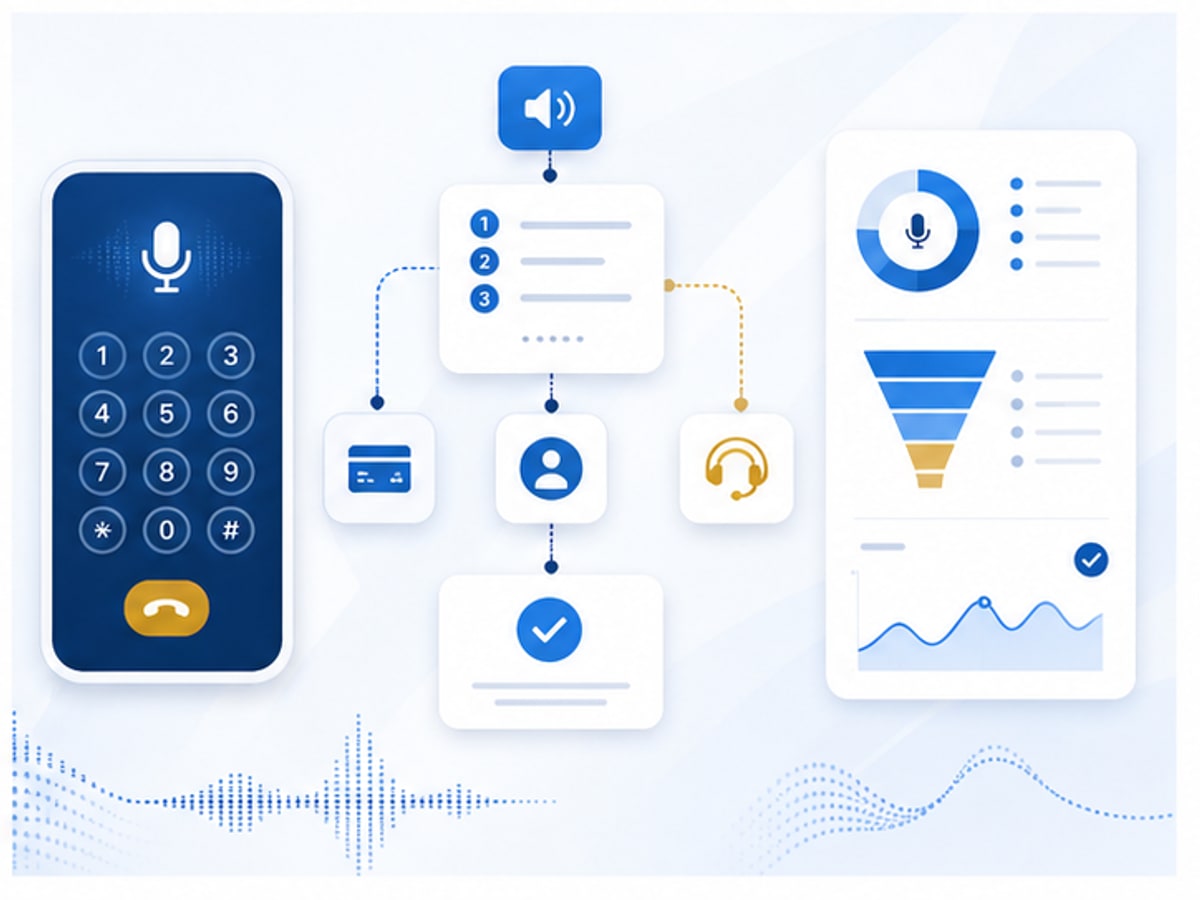
What the caller hears while they wait
Abandonment is driven less by the length of the wait than by its uncertainty. A caller who knows the wait is six minutes will often hold; a caller with no information abandons at three, because they have no basis for expecting it to end.
So the wait experience is a lever in its own right. Give a genuine position or time estimate rather than a rotating apology, and make it accurate — an estimate that repeatedly understates destroys trust faster than silence. Offer a route out that is useful: a callback, a self-service option that genuinely resolves, or a message. Avoid marketing messages to a waiting caller, which measurably increases abandonment among people already irritated. And check the first fifteen seconds specifically: a menu that is long, unclear, or hides the route to a person produces abandonment before the queue has even been joined, and it is usually invisible in queue-level reporting.
Forecast error is the upstream cause
Persistent abandonment is usually a planning problem wearing an operational disguise. If the forecast is wrong, or the schedule does not match the forecast, or adherence does not match the schedule, no amount of queue management will fix the resulting understaffing — it will only distribute it.
Check the chain in order. Compare forecast to actual by interval, not by day, because a daily total can be perfect while every interval is wrong. Then compare scheduled staff to forecast requirement, which is where an accurate forecast is often quietly ignored for scheduling convenience. Then compare actual staffing to schedule, which is where shrinkage lands: breaks, meetings, training and absence that the plan did not carry. Most chronic abandonment resolves at one of those three joints. Our staffing calculator runs the Erlang C relationship between staffing, service level and wait, and seasonal staffing covers the planning side when volume is not flat.
How to Reduce Call Abandonment Without Just Adding Agents: Frequently Asked Questions
What is an acceptable abandonment rate?
Many voice programs aim below five per cent, and emergency or high-value lines target considerably lower, but the honest answer is that it depends on what a lost call costs you. For a restoration contractor or a medical practice, a single abandoned call can be a serious outcome and near-zero is the only sensible target. For a low-value, high-volume retail line the same rate is unremarkable. Set the target from the value of a call rather than from a published benchmark.
Do callbacks actually reduce abandonment?
Consistently, and it is usually the single highest-return change available — provided the callback holds the caller's place in the queue and genuinely happens when promised. Where it fails is when the callback is offered as a way to clear the queue and then arrives hours later, or never. Callers learn quickly, refuse the offer the next time, and you have spent the trust as well as the money.
Is a short abandon threshold cheating?
Excluding very short abandons — the first five seconds or so — is standard practice and defensible, because those are overwhelmingly misdials and immediate hang-ups rather than people who wanted to reach you. It becomes cheating when the threshold creeps upward to flatter the number. Pick a threshold, document it, and leave it alone; if it moves, every historical comparison you make is meaningless.
Should we just add agents?
Only after checking the schedule, because most centers have roughly enough agents in total and the wrong distribution across the day. Compare call arrival against staffing at half-hour intervals: if the shortfall is concentrated in predictable windows, moving shift starts and breaks is free and often sufficient. Headcount is the right answer when the shortfall is genuinely spread across the whole day, and it is the most expensive place to start.
Running the operation
Keep reading
The rest of this cluster, for the question you are actually working through.
- First Call Resolution: The Metric Most Contact Centers Measure Wrong
- CSAT, NPS, CES and the Metrics Worth Putting on a Dashboard
- Call Center Attrition: What It Really Costs and What Reduces It
- Seasonal Support Staffing: Covering a Peak Without Carrying It All Year
- Writing a Call Center SLA That Means Something
- PCI Compliance in a Call Center: Where Card Data Actually Leaks


Sources and References
The laws, standards and certifications this page refers to, linked to their official text or publisher.
- PCI DSS (Payment Card Industry Data Security Standard), PCI Security Standards Council: handling of payment card data.