

An answering service and a call center solve different problems. The deciding question is whether your issue is coverage or volume — and buying the wrong one is expensive in both directions.
The short answer
An answering service exists so that a person picks up when your team cannot. A call center exists to absorb volume your team cannot handle at all. If your problem is hours, you want an answering service. If your problem is quantity, you want a call center. Most businesses that buy the wrong one have diagnosed the wrong problem.
The confusion is understandable, because from the caller's side both look identical: they dial your number and a trained person answers. The difference is in what happens next, how the program is staffed, and what you are paying for.
What an answering service actually does
An answering service is a coverage product. Its job is to make sure that a call arriving at seven in the evening, on a Sunday, or during the two hours your entire team is in a meeting reaches a human who can take it seriously. Agents work from your rules: what counts as an emergency, who gets paged, what may be promised, what has to wait until morning.
The volume is usually modest and the value is concentrated in a small number of calls. A plumbing company might take fifteen after-hours calls in a week, and two of them are burst pipes worth more than the rest of the month. The service is not solving a throughput problem; it is making sure those two calls do not go to voicemail and then to a competitor.

What a call center actually does
A call center is a capacity product. It exists because the interactions arriving at your business exceed what your own staff can process — hundreds or thousands per day, across phone, email, chat and social, with service levels attached and reporting to prove them.
That changes everything about how it is built. Agents are trained deeply on your products rather than lightly on your escalation rules. There is workforce management behind the roster, because forecasting matters when you are staffing to an interval. There is quality assurance, because consistency across fifty agents is not automatic. And there is a technology layer — routing, dialers, CRM integration, reporting — that an answering desk does not need.
Five questions that settle it
- When do your missed calls happen? If they cluster outside business hours, it is a coverage problem. If they happen at eleven on a Tuesday morning, it is a volume problem.
- How many calls are we talking about? Tens per week points one way; hundreds per day points the other.
- Can an agent resolve the call, or only route it? Answering desks route and capture. Call centers resolve.
- Do you need service levels in a contract? Formal SLAs, occupancy targets and interval reporting belong to a call center program.
- How much product training would an agent need? If the answer is weeks, you are describing a call center.
The overlap in the middle
There is a genuine middle ground, and pretending otherwise is how buyers get sold the wrong thing. A business with a busy daytime phone and a small team often needs overflow: an outside desk that picks up when the internal line rings more than three times, during business hours, and hands back anything that needs real product knowledge. That is answering-service staffing with call-center-style routing, and it is a common shape.
Equally, a growing company frequently starts on an answering service and outgrows it. The signal is not volume alone — it is the proportion of calls the desk has to route rather than resolve. When most calls end in a message, the desk has become a switchboard and the money is better spent on agents who can finish the conversation.
What it costs you to get it wrong
Buying a call center when you needed an answering service means paying for trained capacity that sits idle, and being quoted on volumes you do not have. Buying an answering service when you needed a call center is worse: callers reach a person who cannot help them, which is more frustrating than voicemail, because the caller has now spent time and still has to call back.
If you are unsure, the diagnostic is your own call data. Pull the timestamps on missed and abandoned calls for the last month. The distribution answers the question before anyone quotes you anything.
See how 24/7 answering services are staffed, or compare against a full inbound call center program.
What each one costs you in staff time
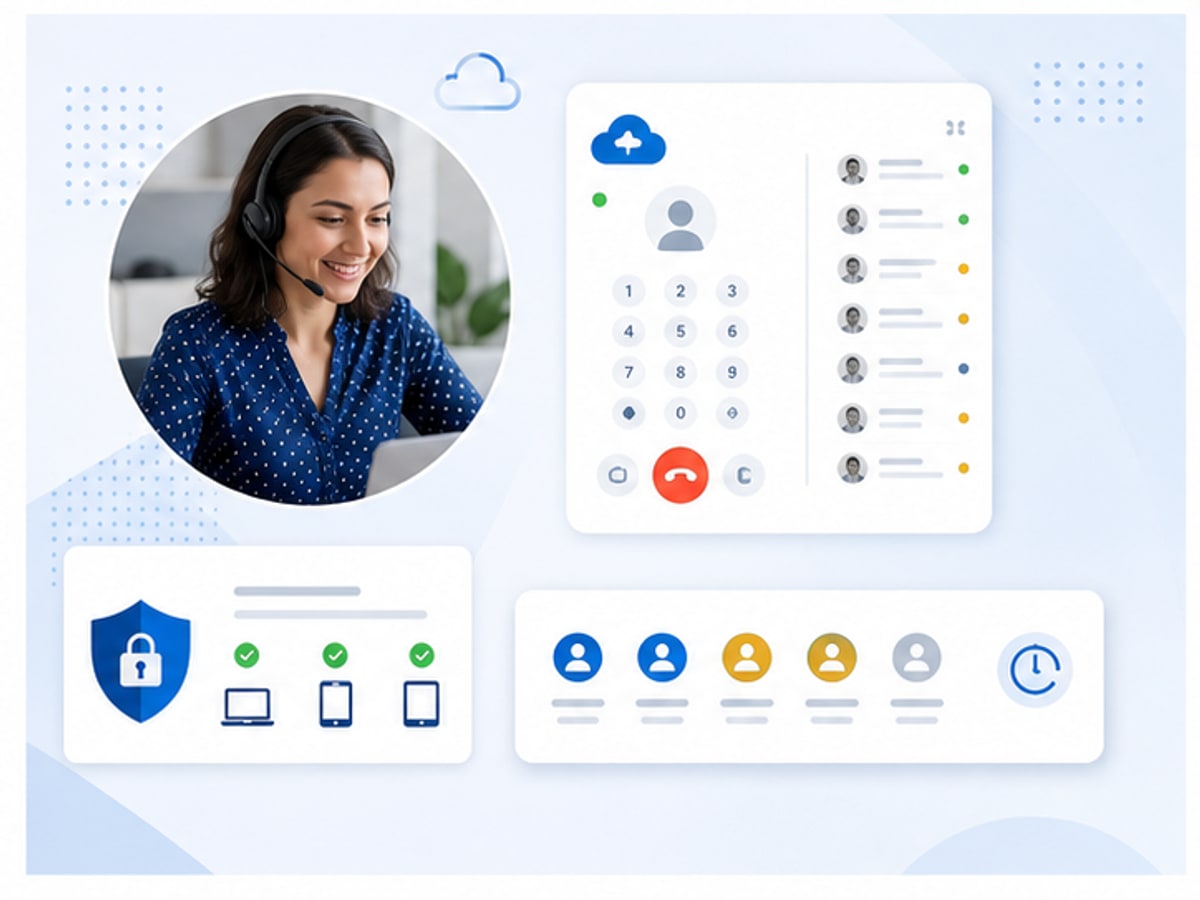
The comparison is usually framed as a service comparison, and the difference that decides it is often internal workload. An answering service produces messages: someone on your side reads them, decides what matters, and calls people back. That is real work, it lands on whoever is least busy, and at moderate volume it can consume more time than the service saved.
A call center resolves rather than relays, which removes that internal step but requires far more from you up front — systems access, documented processes, defined authority, and someone to manage the relationship. The honest way to choose is to count both sides. Estimate the messages per week and the minutes each takes to action, then compare that against the setup and oversight a resolving program needs. Businesses that outgrow an answering service usually discover it through this arithmetic rather than through a service failure: the calls are answered perfectly and the callback pile keeps growing.
The signals that you have outgrown message-taking
The transition point is recognisable, and most businesses pass it some months before they act on it. The signals: the callback pile is no longer cleared the same day; the same three questions account for most messages and each has a stable answer that an agent could give; callers are visibly irritated at being told someone will ring back; the message volume now needs a person rather than a spare half hour; or you have started staffing internally around the messages, which is the point at which you are paying twice.
None of these means the answering service failed. It means the volume outgrew the product. The usual next step is not a wholesale switch but a hybrid: keep message-taking for genuinely out-of-scope calls and move the two or three highest-frequency, fully documented request types to a team that can complete them.
Migrating without breaking the phone
Moving between the two is where continuity is most often lost, because the number is the thing customers rely on. Keep it under your control: the phone number should be yours, ported or forwarded to whichever provider is answering, never issued by the provider and left in their name. That single decision determines whether a change is a configuration edit or a communications project.
Then move in stages rather than at once. Run the new provider on a subset — an overflow route, one service window, or one call type — before switching the main line, and keep the previous arrangement live until the replacement has handled a full cycle including a weekend and an out-of-hours peak. Document the escalation list, the message format and the transfer rules for the new team rather than assuming they inherit them. And confirm that recordings, message history and any consent evidence come with you, since data return is negotiated before an exit far more easily than during one.
Answering Service vs Call Center: Frequently Asked Questions
Can one provider do both?
Yes, and for most growing businesses that is the practical answer, because the requirement usually changes before the contract does. What matters is that the two are scoped separately rather than sold as one blended service — an answering desk priced and staffed like a call center is expensive for what it delivers, and a call center staffed like an answering desk cannot hit a service level. Ask a provider to describe how they would move you from one to the other, and whether the agents would be the same people.
Is an answering service just voicemail with a person?
It is if it is badly built, and that is a fair thing to test for. A desk that only takes a name and a number has moved the problem rather than solved it — somebody on your team still has to call back and start over. A properly built one works from your systems: it can see the schedule, open the job, apply your emergency rules and tell the caller something true about what happens next. When you evaluate providers, ask what an agent can actually do, not what they can record.
We only miss a few calls a week. Is it worth it?
That depends entirely on what a call is worth in your business, not on how many there are. A dozen missed calls a week is trivial for a retailer and serious for a restoration contractor, where one of them is a flooded building. Work out the average value of a converted inbound inquiry, assume only a fraction of missed calls would have converted, and compare. For high-ticket and emergency trades the arithmetic is usually not close.
Which one handles chat and email?
Either can, but the expectation differs. Answering-service coverage on chat and email is about making sure nothing sits unread overnight or over a weekend, with the same routing and escalation rules as the phone. A call center program treats them as full channels with their own service levels, staffing model and quality scoring. If email is currently a shared inbox nobody owns, start with coverage; if it has a backlog and a target response time, you are describing a contact center.
Answering services
Keep reading
The rest of this cluster, for the question you are actually working through.
- What Drives Answering Service Cost (And What to Ask Before You Buy)
- After-Hours Answering: Designing Coverage That Pays for Itself
- HIPAA and Your Answering Service: What Actually Has to Be True
- 24/7 Live Answering Service | A Person Answers, Every Hour of Every Day
- Home Services Answering Service | 24/7 Dispatch for Every Trade
- IT Answering Service | 24/7 Live Intake and Ticketing for MSPs



Start here
24/7 Answering Service
How a live answering service works, what it covers and how it is run for your trade.
Sources and References
The laws, standards and certifications this page refers to, linked to their official text or publisher.
- HIPAA (Health Insurance Portability and Accountability Act), U.S. Department of Health & Human Services: privacy and security rules for protected health information.