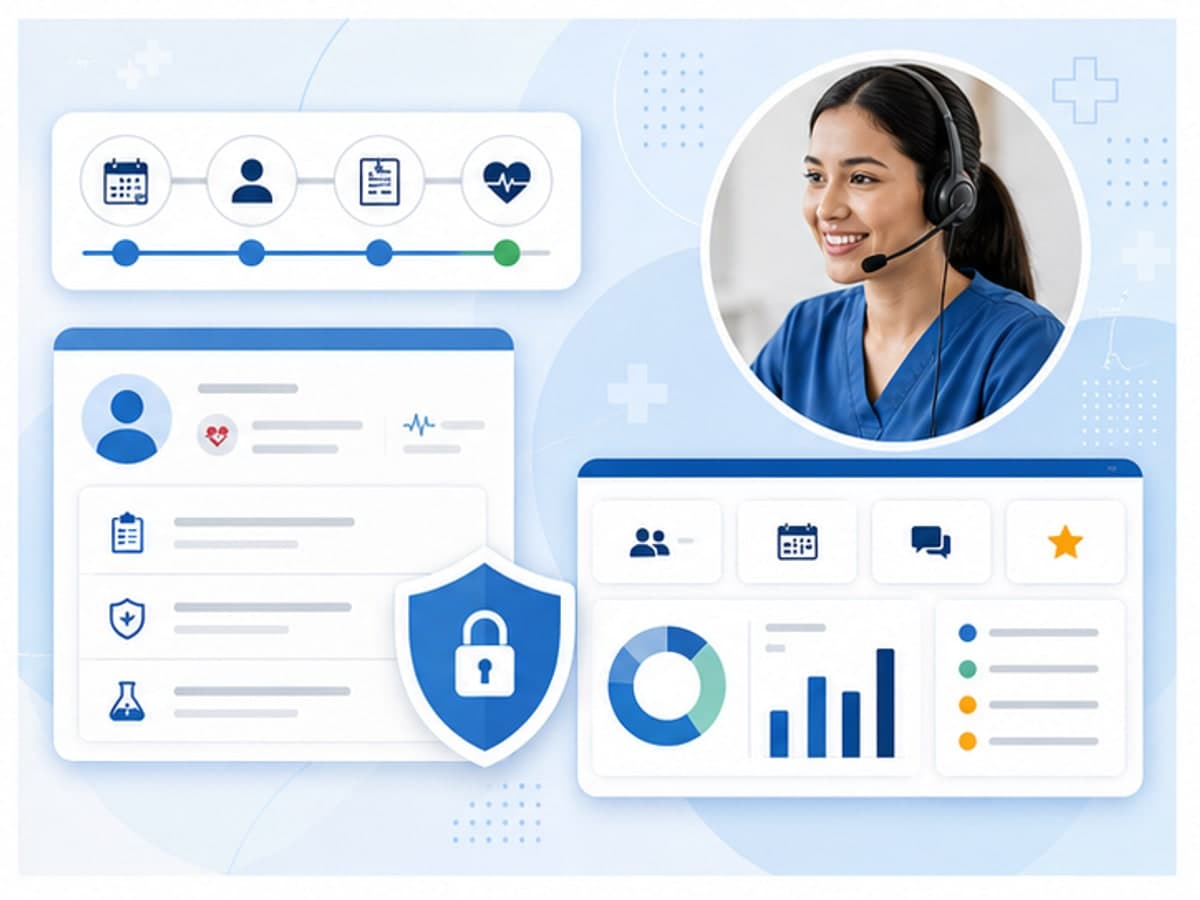
How healthcare organizations outsource patient-facing support — scheduling, eligibility, billing questions, and portal help — with HIPAA-compliant operations and the empathy patient conversations demand.
The patient-access bottleneck
In most healthcare organizations, the phone is the front door — and the front door is jammed. Scheduling lines with long holds, voicemail boxes for refill requests, billing questions bouncing between departments. Every abandoned call is a delayed appointment, an unfilled slot, or a frustrated patient heading to another provider. Clinical staff end up absorbing the overflow, which is the most expensive possible way to answer a phone.
What healthcare support programs handle
- Appointment scheduling: booking, rescheduling, cancellations, and recall campaigns worked directly in the EHR/PM system — with reminder workflows that measurably cut no-shows.
- Eligibility and benefits questions: coverage verification, referral and authorization status, and network questions answered from live payer data.
- Billing and statement support: explaining statements, taking payments, setting up plans — patiently, because a confused billing call handled badly becomes both a complaint and an unpaid balance.
- Patient portal and telehealth help: password resets, appointment check-in help, and visit-link troubleshooting, especially for less technical patients.
- After-hours answering and triage routing: capturing requests overnight and routing urgent matters to on-call clinical staff under strict protocols — support staff never give medical advice.

HIPAA is the entry ticket, not the differentiator
Any provider handling protected health information must operate as a business associate under a signed BAA, with trained agents, need-to-know access controls, secure systems, audit logging, and breach notification procedures. Verify all of it — certifications, training records, access design — but treat it as the qualifying bar. The differentiator is what happens on the call. If you are comparing providers, our guide to the top healthcare BPO companies lists the safeguard and workflow questions to put to each one.
The differentiator: empathy under process
Healthcare callers are often anxious, unwell, or calling for someone who is. The service standard is different from retail: patience over pace, plain language over jargon, and absolute reliability on follow-through — a promised callback that never comes erodes trust that took years to build. Good programs recruit for warmth, train on health-literacy communication, and QA calls for empathy alongside accuracy.
What to measure
- Answer speed and abandonment on scheduling lines — abandoned scheduling calls are revenue and care gaps, not just service misses.
- Schedule utilization and no-show rate — the numbers scheduling support actually moves.
- First-contact resolution on billing and portal questions.
- Patient satisfaction, measured per contact type rather than blended.
Global Empire Corporation runs HIPAA-compliant patient access and support programs — scheduling, eligibility, billing, and portal help — with agents trained for the conversations healthcare actually involves. Explore our healthcare BPO services or request a proposal.
The compliance architecture a healthcare programme has to carry
What separates healthcare support from every other vertical is that the compliance is in the call flow, not around it. Identity verification has to happen before anything is disclosed, and the pressure to skip it is constant — the caller is anxious, the agent wants to help, and the fastest way to help is exactly the thing the rules prohibit. A programme survives that pressure only when verification is built into the workflow as a gate the system enforces rather than a step the agent remembers, and when the training explains why the gate exists rather than only that it does.
Three further design decisions carry most of the weight. Minimum necessary disclosure: agents are trained and scripted to confirm rather than volunteer — answering what was asked, not reading the record aloud. Documentation: what was disclosed, to whom, and after what verification has to be reconstructable later, which means it is logged as structured events at the time rather than inferred from a recording afterwards. And the business-associate relationship itself: the provider is inside your compliance boundary, so the agreement, the breach-notification path and the audit rights are part of the operating model, not legal paperwork filed after signature.
Buyers evaluating providers should ask to walk through one call, concretely: how the system prevents disclosure before verification completes, what the agent sees and cannot see, and how an accidental disclosure would be detected, documented and reported. A provider who answers with a training deck has a policy. A provider who answers with a workflow has a programme.
Scheduling is a clinical workflow, not a booking system
Patient access programs are often scoped as appointment booking and then fail on the clinical rules that surround it. An appointment is not an empty slot: it has an appointment type with a duration, a provider whose availability differs by location and day, prerequisites such as fasting or referrals or prior authorisation, and equipment or room constraints the calendar may not express.
Get these written down before launch, including the ones staff apply from memory. Which appointment types may be booked without clinical review, which require triage first, what to do when a caller describes symptoms that should not wait for the next available slot — that last one is not optional. An agent must never assess clinical urgency, and must have an immediate, rehearsed route to a clinician when a caller describes something concerning. Programs that leave this implicit rely on individual judgment in exactly the situation where judgment should not be individual.
The minimum necessary rule in daily practice
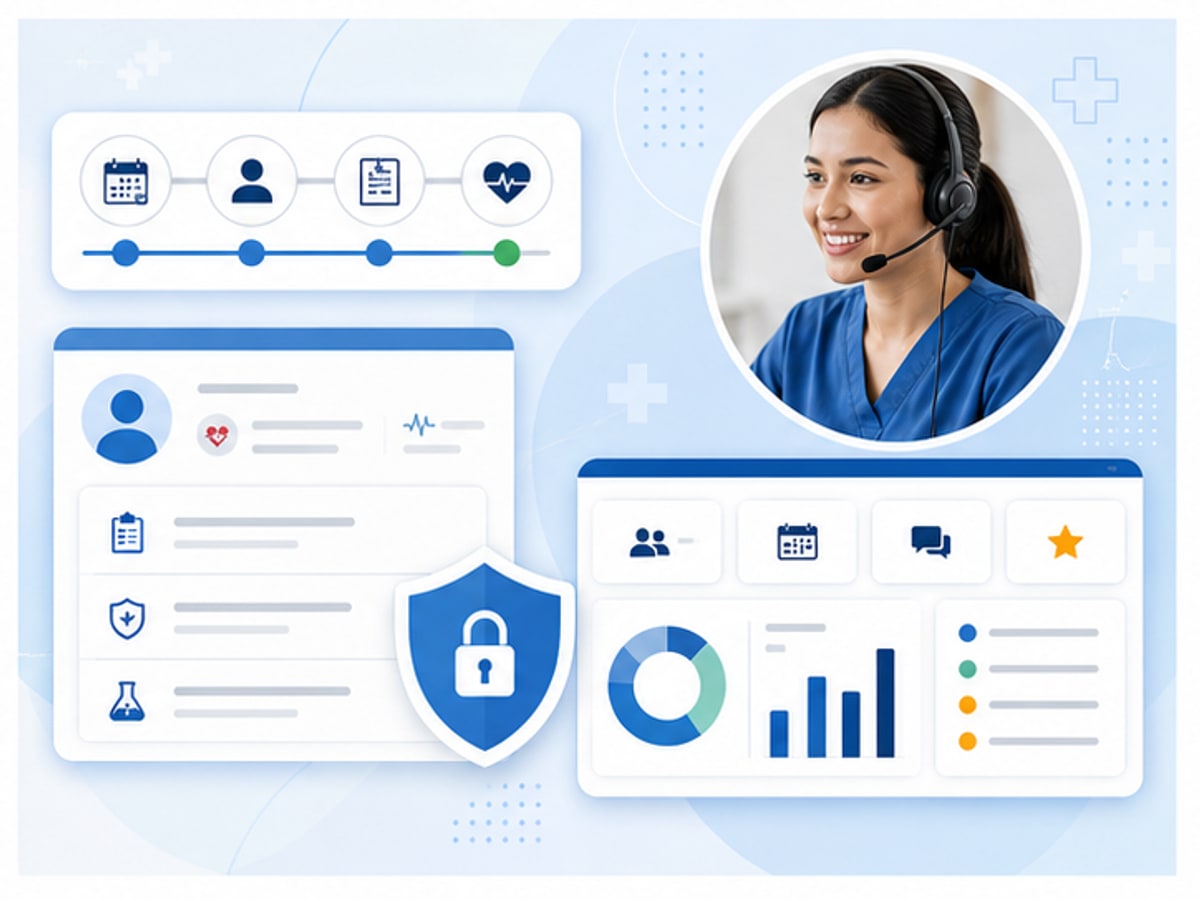
Signing a business associate agreement is the beginning of the obligation, not the discharge of it. The operational commitment is the minimum necessary principle, and it shows up in decisions that get made long before an incident.
Concretely: agents should see the fields their task requires, not the whole record, which is a system configuration decision rather than a training one. Call recordings and screen captures contain protected information and need the same retention, access and deletion controls as the record itself. Notes should be structured, because free-text fields accumulate clinical detail nobody intended to store. Verification scripts must confirm identity without disclosing information to an unverified caller — a script that reads back an address to confirm it has already disclosed it. And family members calling on a patient's behalf need a defined authorisation rule, since this is the single most common point at which well-meaning agents disclose more than they should. Our HIPAA guide covers the controls worth verifying in a provider.
Measuring access rather than efficiency
Healthcare support measured on handle time optimises for the wrong outcome. The metrics that describe whether patient access is working sit around the appointment rather than the call.
Track third-next-available appointment as the real measure of access capacity, abandonment during peak periods since abandoned calls become missed care rather than a lost sale, the share of contacts resolved without a callback, booking accuracy measured by same-day cancellations and no-shows caused by wrong bookings, and the rate at which clinical escalations were correctly recognised — audited, not self-reported. Read alongside service metrics, the distinction matters: a queue that answers quickly and books wrongly has moved the failure into the clinic.
Frequently asked questions
Can healthcare support be outsourced under HIPAA?
Yes — the provider operates as a business associate under a signed BAA, with trained agents, restricted access to PHI, secure systems, audit logging, and breach notification procedures. Verify the controls in the security review, not just the claim.
Do outsourced agents give medical advice?
Never. Support agents handle scheduling, eligibility, billing, and administrative questions; anything clinical routes to licensed staff under defined triage protocols with clear escalation rules.
Can outsourced schedulers work in our EHR?
They should — direct scheduling in your EHR/PM system with role-scoped access is what makes the program effective. Established healthcare providers train agents on the major platforms and your specific templates and rules.
What results should scheduling support deliver?
Higher answer rates and faster speed to answer, improved schedule utilization, lower no-show rates through reminder workflows, and recovered revenue from recall campaigns and filled cancellations.
Why not just add front-desk staff instead?
Front-desk teams juggle in-person patients and phones simultaneously, and both suffer. A dedicated patient-access team answers consistently, works recall lists proactively, and costs less than absorbing calls with clinical staff time.
By industry
Keep reading
The rest of this cluster, for the question you are actually working through.
- Financial Services Call Center Outsourcing: A Compliance-First Guide
- Ecommerce Customer Service Outsourcing: Peaks, Channels and Returns
- Hospitality Call Center Outsourcing: Reservations, Guests and Peak Demand
- Legal Call Center Outsourcing: Intake, Confidentiality and After-Hours Coverage
- Manufacturing Call Center Outsourcing: Order Desk, Dealer Support and Warranty Lines
- Retail Call Center Outsourcing: Peak Season, WISMO and Returns Done Right
- Telecom Call Center Outsourcing: Churn, Tier-1 Tech Support and Billing at Volume