

How ecommerce support differs from other outsourced customer service — seasonal peaks, channel mix, returns and WISMO volume — and how to structure a program that scales without hiring for December all year.
The seasonality problem
Ecommerce support has a shape almost no other sector shares: a demand curve where the busiest weeks can run several times baseline volume, concentrated into a period you cannot move. Staffing internally for that peak means carrying idle capacity for ten months; staffing for the average means failing customers exactly when they are spending the most.
This is the clearest, least controversial case for outsourcing. A provider can flex capacity into your peak and back out afterwards, because your quiet season is another client's busy one.
What ecommerce support actually consists of
Volume in most stores is dominated by a small number of contact reasons:
- Where is my order — routinely the single largest category, and the most automatable
- Returns and exchanges — high volume, rules-driven, and directly tied to retention
- Product and fit questions — pre-purchase, and the ones with revenue attached
- Payment and checkout problems — low volume, high urgency, high abandonment cost
- Damaged, missing, and wrong items — where resolution quality decides whether the customer returns
- Cancellations and address changes — time-critical against your fulfilment window
Categorize your own volume before scoping a program. Most operations discover that order-status contacts dominate and are largely deflectable, which changes both the headcount you need and the case for automation.

Channel mix matters more here
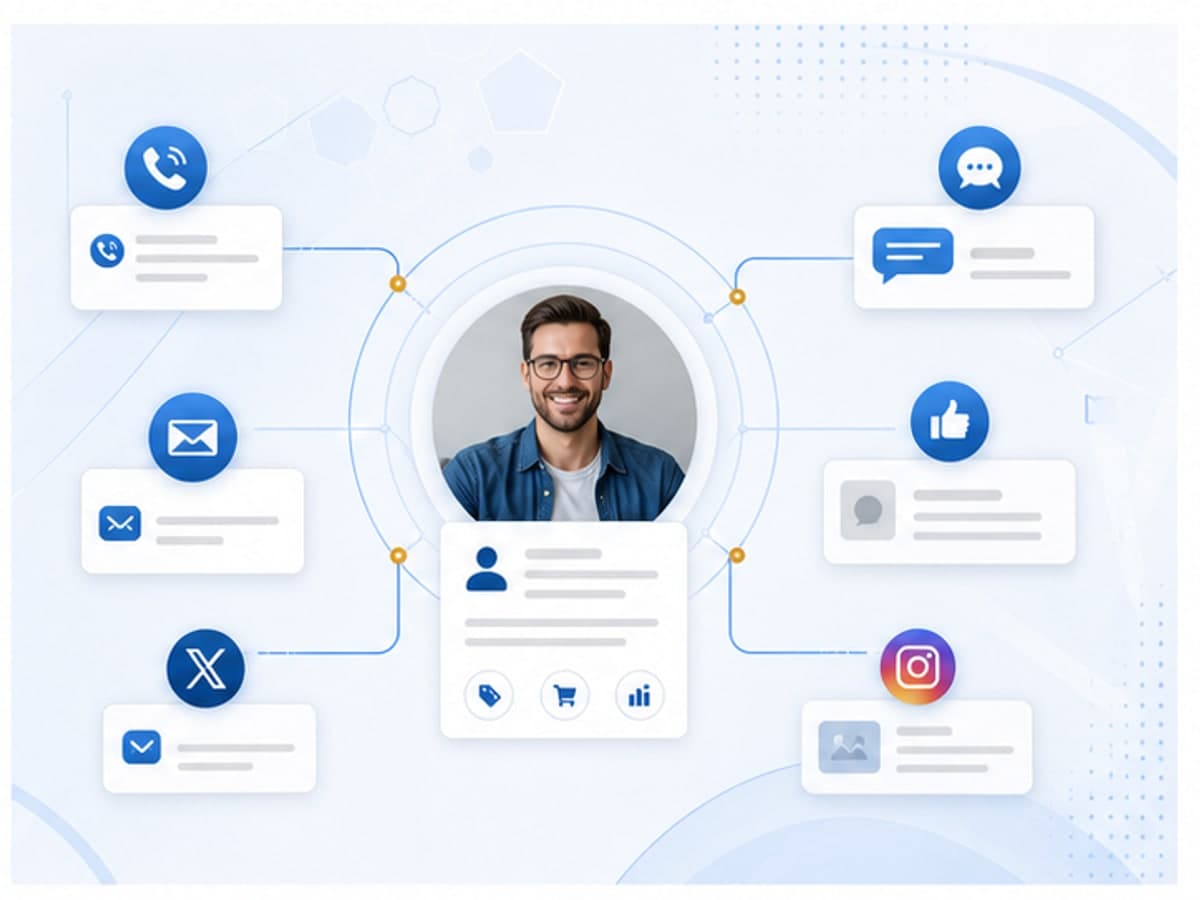
Ecommerce customers overwhelmingly prefer written channels. Chat converts on product pages, email handles anything non-urgent, and social becomes a support channel whether you staff it or not. Voice matters for high-value orders and escalations but is rarely the volume leader.
Two consequences for outsourcing. First, written channels are the easiest to outsource well — reviewable, asynchronous, and unaffected by accent or time zone. Second, chat on commercial pages should be measured on conversion and revenue per chat, not just deflection, because it is a sales surface as much as a support one.
Returns are a retention decision
A return is not a failed sale — it is the moment a customer decides whether to shop with you again. Outsourced teams handling returns need clear authority: what they can approve without escalation, what goodwill they can offer, and when to prioritize the relationship over the policy.
Programs that require escalation for every exception produce slow resolutions and frustrated customers. Define the decision rules and the discretion limits, then let agents use them.
Systems access decides quality
An ecommerce agent who cannot see the order, the fulfilment status, the payment record, and the returns history is guessing. Before launch, confirm agents will work inside your commerce platform, helpdesk, and carrier tracking rather than requesting information from your internal team. Most poor outsourced ecommerce support traces back to inadequate access, not inadequate agents.
Planning the peak
- Forecast from last year's actuals by week and channel, adjusted for growth and planned promotions
- Lock capacity early — providers allocate peak capacity months ahead, and late requests cost more
- Train before the ramp, not during it; agents onboarded in week one of peak are not productive until it is over
- Deflect the deflectable — order status self-service pays for itself fastest in the weeks it matters
- Agree a surge trigger and what it costs, so a promotion that overperforms does not become a service failure
Measure what affects revenue
Track first response and resolution time by channel, first-contact resolution, and CSAT — but also the commercial numbers: chat-assisted conversion, average order value with and without a support interaction, return rate by reason, and repeat purchase rate among customers who contacted support. Support quality in ecommerce shows up in retention long before it shows up in a satisfaction score.
Pre-purchase contacts are a revenue channel
Ecommerce support queues are usually staffed as a cost centre, and a meaningful share of the contacts in them are pre-purchase: sizing, compatibility, stock, delivery timing, returns policy. These are buying questions from people holding a basket, and they convert at rates ordinary marketing traffic does not.
Treating them as tickets to close quickly wastes them. Route pre-purchase contacts to agents trained on the catalogue rather than on policy, prioritise them during peak trading hours, and measure them separately — assisted conversion rate and assisted order value, not handle time. This is also the strongest argument for live chat placed on product and basket pages rather than buried in a help centre: the contact happens while the decision is still open. Our live chat guide covers the placement and staffing side.

WISMO, and fixing the cause rather than staffing the symptom
"Where is my order" is typically the largest single contact driver in ecommerce support, and it is almost entirely a failure of proactive communication rather than a genuine service need. Every one of those contacts is a customer who could not find, did not receive, or did not trust the tracking information they already had.
The provider you hire will happily staff for the volume; a good one will help you reduce it. Track WISMO as a percentage of orders rather than a raw count, and split it by cause: no notification sent, notification not received, tracking not updating, delivery genuinely late, or delivered-but-not-found. Each has a different fix, and most are upstream of support. A program where WISMO share falls quarter on quarter is working; one where it holds steady while headcount grows is being managed as a queue rather than as a problem.
Marketplace and social channels have their own clocks
Selling through marketplaces imports their service rules. Response-time windows are enforced by the platform, measured on their clock rather than yours, and poor metrics carry consequences that ordinary support failures do not — reduced visibility, lost buy-box eligibility or account restrictions. Those queues cannot be treated as overflow to be worked when the phone quietens.
Public social channels carry a different risk: the conversation is visible, and the reply is read by people who were never going to contact you. Both need explicit coverage in the staffing plan, named ownership, and separate reporting against the platform's own targets rather than your internal service level. Where volume is meaningful, our social media support and omnichannel pages cover how these queues fit alongside voice and email.
Frequently asked questions
Why outsource ecommerce customer service rather than hire?
Seasonality. Peak weeks can run several times baseline volume, so hiring for the peak means carrying idle capacity most of the year while hiring for the average means failing customers when they are spending most.
Which ecommerce contacts are easiest to outsource?
Written channels — email, chat, and tickets — because they are asynchronous, reviewable before sending, and unaffected by time zone. Order status, returns, and product questions all transfer well with proper system access.
How far ahead should we plan peak capacity?
Months. Providers allocate peak capacity well in advance, agents need training before the ramp rather than during it, and late capacity requests are both more expensive and less reliable.
Should outsourced agents be able to approve refunds?
Within defined limits, yes. Requiring escalation for every exception produces slow resolutions and frustrated customers. Set explicit decision rules and discretion limits, then let agents work inside them.
What is the most common cause of poor outsourced ecommerce support?
Inadequate system access. An agent who cannot see the order, fulfilment status, payment record, and returns history is guessing, no matter how well trained they are.
By industry
Keep reading
The rest of this cluster, for the question you are actually working through.
- Financial Services Call Center Outsourcing: A Compliance-First Guide
- Hospitality Call Center Outsourcing: Reservations, Guests and Peak Demand
- Legal Call Center Outsourcing: Intake, Confidentiality and After-Hours Coverage
- Manufacturing Call Center Outsourcing: Order Desk, Dealer Support and Warranty Lines
- Retail Call Center Outsourcing: Peak Season, WISMO and Returns Done Right
- Healthcare Customer Support Outsourcing: Patient Access Without the Compliance Risk
- Telecom Call Center Outsourcing: Churn, Tier-1 Tech Support and Billing at Volume
Hiring agents
Hiring for the Seat Rather Than Buying a Program?
The same operation, scoped as a role you are staffing: who employs the agent, who supervises them, and what standard they are held to.
- Cold Calling Agents
- Real Estate Callers
- Call Center Agents
- Customer Service Agents
- Chat Support Agents
- Appointment Setters
- Delivery App Support
- Cold Calling Virtual Assistant
- Inbound Call Agents
- Bilingual Agents
- Rideshare Support Agents
- Ecommerce Support Agents
- Technical Support Agents
- Insurance Agency Call Agents
- Medical Front Desk Agents
- Dedicated vs Shared Agents
- SDRs
- Telemarketers
- Outbound Calling Agents
- Sales Reps
- Virtual Receptionist