
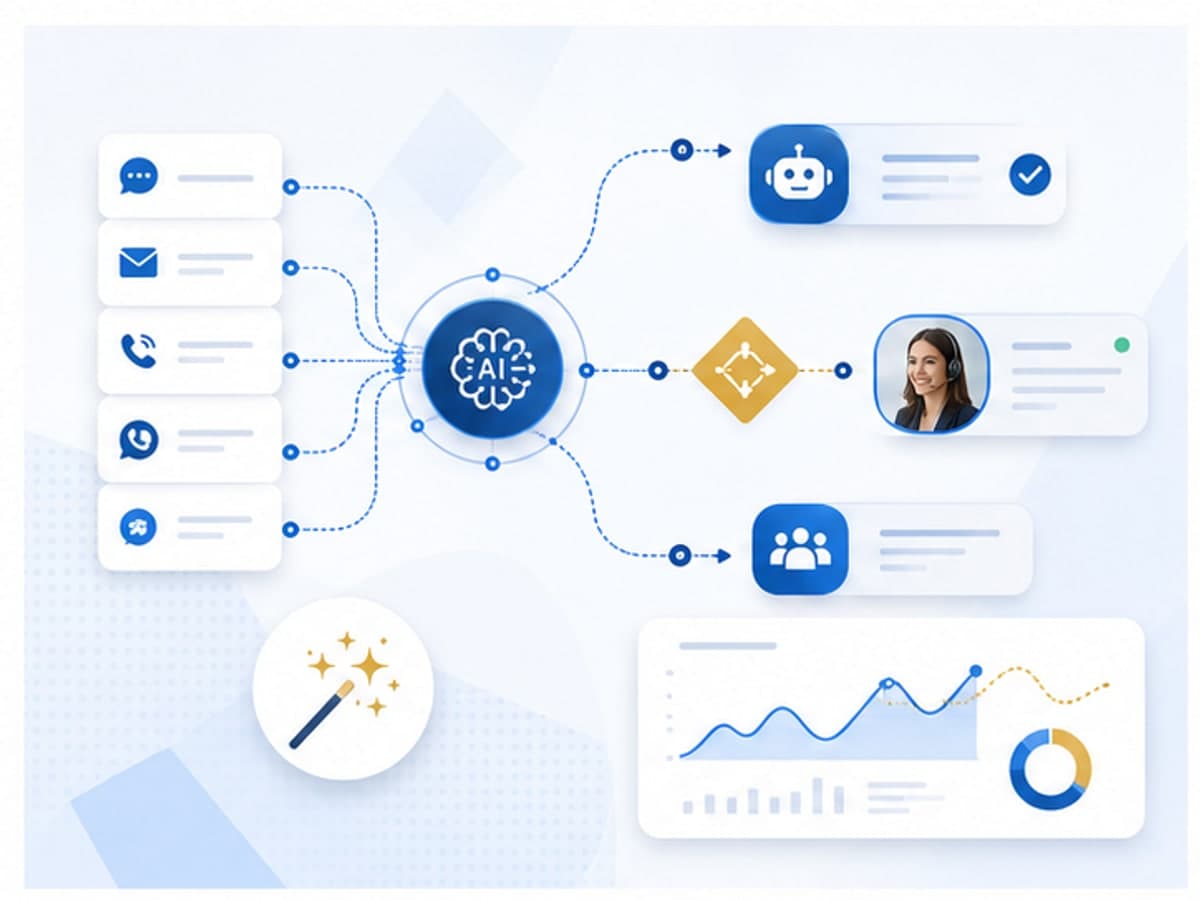
A clear-eyed comparison of AI and human call center support — what automation genuinely does well, where human agents remain decisively better, and how to combine the two without damaging customer relationships.
The real question is not AI or humans
Every customer operation is being pitched AI right now, usually framed as a replacement decision: bots or agents. That framing is wrong. The operational question is which interactions genuinely resolve without a person, and which ones convert, retain, or escalate depending on human judgment. Get that split right and both sides perform. Get it wrong and the savings on the automated side are quietly repaid — with interest — in churn, abandoned purchases, and public complaints on the human side.
What AI handles well
- Genuinely simple, repetitive requests: order status, store hours, password resets, balance checks — interactions with one right answer and no emotional content.
- After-hours triage: capturing intent and details overnight so a human can act first thing, rather than losing the contact entirely.
- Routing and intake: identifying why someone is calling and getting them to the right queue faster than a menu tree.
- Agent assist: the strongest AI use case in the industry today sits behind the agent, not in front of the customer — surfacing account context, suggesting next steps, and drafting wrap-up notes so agents spend more time listening.
Where human agents win — and keep winning

Emotion and de-escalation
An angry customer does not want their sentiment classified; they want to feel heard. A skilled agent absorbs frustration, acknowledges it, and turns the interaction around. A bot that responds to fury with cheerful canned empathy makes the anger worse — and the customer remembers who made it worse.
Judgment on exceptions
Real customer problems are messy: the order that shipped to the old address during a move, the claim that technically fails one rule but obviously deserves an exception, the account with three overlapping issues. Automation handles the case it was trained on. Humans handle the case in front of them.
Revenue conversations
Saves, upsells, renewals, and win-backs are negotiations, not transactions. They depend on reading hesitation, adjusting the offer, and knowing when to stop talking. No customer has ever been talked out of cancelling by a chatbot. These calls carry the highest value per minute in the entire operation — and they are human calls.
Trust, accountability and compliance
In healthcare, finance, insurance, and legal contexts, customers need to know a responsible person handled their situation — and regulators expect it. A human agent can recognize when the safe answer is "let me check and call you back." A model that confidently invents a wrong answer creates liability no cost saving covers.
Customers still choose people
Ask customers what they want when something actually matters and the answer is consistent: a competent person, quickly. Deflection metrics can look excellent while the customers who were deflected quietly stop buying. The companies that force automation on complex issues are the same ones whose customers celebrate discovering the phrase "talk to an agent."
The hidden costs of over-automating
- Silent churn: customers who fail in the bot loop rarely complain first — they leave first.
- Escalation friction: every failed automated attempt raises the temperature of the eventual human conversation, making the agent's job harder and longer.
- Brand damage: a bad agent call is one bad call; a bad bot experience is systematic, identical, and repeated for every customer who hits it.
- Data without ownership: when no person owns the interaction, nobody notices the recurring problem the transcripts were shouting about.
The model that works: humans in front, AI behind
The strongest operations we see run human-led programs with automation in support: AI handles genuinely transactional volume and after-hours capture, routes intelligently, and assists agents in real time — while trained people own every conversation involving emotion, judgment, exceptions, or revenue. Customers get resolution; the business gets both efficiency and the relationship.
That is the model Global Empire Corporation runs: technology where it strengthens service, and skilled human agents on every conversation that decides whether the customer stays. Explore our inbound call center services and customer care outsourcing programs, or see how the two combine in a multichannel program.
Containment is the metric that misleads
Automation programs are almost always reported on containment — the share of contacts resolved without reaching a human. It is the easiest number to move and the easiest to move dishonestly. A bot that frustrates a customer into abandoning has contained the contact. So has one that answers the wrong question confidently, and so has a menu with no visible route to a person.
The honest version pairs containment with what happened next. Measure repeat contact rate within a few days for contained interactions: if a meaningful share of people come back, they were deflected rather than helped. Measure abandonment inside the automated flow, which pure containment hides entirely. And compare satisfaction for contained versus escalated contacts, because a containment rate that rises while satisfaction falls is a cost saving being taken out of customer retention.
Designing the handoff, which is where quality is decided
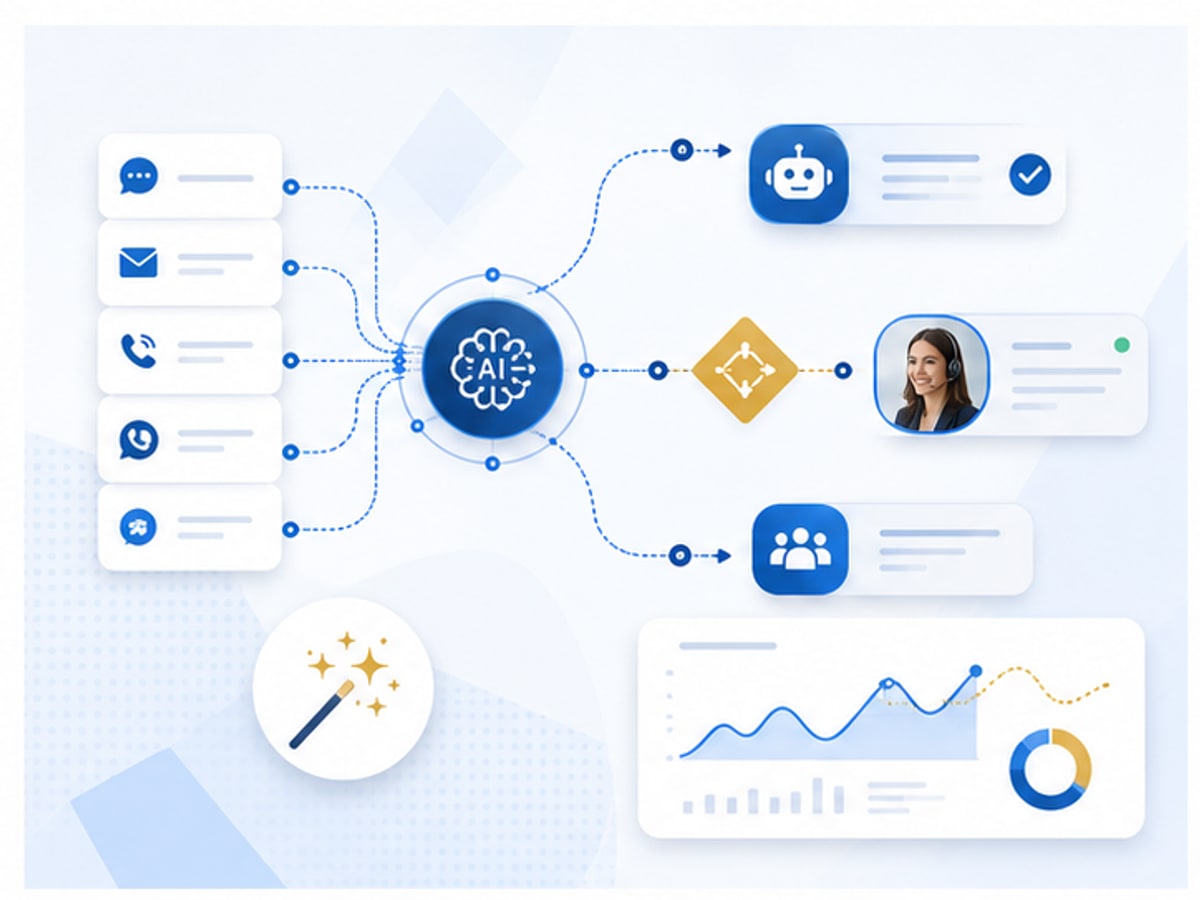
Most of the damage automation does to customer experience happens in the transition, not the automation. The recognisable failure: a customer explains the problem to a bot, waits, reaches an agent, and is asked to explain it again. That interaction is now worse than if the bot had never existed, because the customer has paid the cost of the automation and received none of the benefit.
A handoff worth building carries three things across: the transcript or a summary, whatever the system already verified about identity, and what the automation attempted so the agent does not repeat it. It should also be reachable — an explicit route to a person at any point, not buried after three failed attempts. Design the escalation path first and the automation second; the reverse order produces systems that are efficient until they are not, and then are worse than the queue they replaced.
Where the balance is heading
The trajectory is not automation replacing agents but automation absorbing the routine and changing what remains. As simple contacts are handled without a person, the calls that reach an agent are disproportionately the complex, emotional and ambiguous ones. That has consequences most staffing plans have not yet absorbed: average handle time rises rather than falls, because the easy contacts that pulled the average down are gone. Quality frameworks built for routine transactions stop fitting. And the hiring profile shifts toward judgment and de-escalation over speed.
Read alongside our guide to whether AI will replace agents, the practical planning point is this: budget for a higher cost per remaining contact even as total contacts fall, and revisit your metric targets when you deploy automation, because targets calibrated on the old contact mix will misread the new one.
Frequently asked questions
Is an AI call center cheaper than human agents?
Per interaction, automation is cheaper for the simple contacts it can fully resolve. Measured on outcomes — retention, conversion, lifetime value, and the cost of failed containment — human agents routinely deliver better economics on complex and revenue-bearing calls.
What should be automated first in a call center?
Interactions with one right answer and no emotional content: order status, hours, password resets, basic account lookups, and after-hours intake. Anything involving exceptions, complaints, or money at stake should reach a person.
Do customers accept AI customer service?
For quick transactional answers, generally yes. For problems, complaints, and anything involving trust or money, customers overwhelmingly prefer a competent human — and judge the brand by how quickly they can reach one.
What is AI agent assist?
Software that supports the human agent during a live conversation — surfacing account context, suggesting answers, and automating wrap-up notes. It improves speed and consistency without putting a bot between the customer and a person.
How does Global Empire use technology in its programs?
Automation supports routing, reporting, and agent assistance, while trained human agents handle the conversations themselves — a human-led model designed for programs where customer relationships and compliance matter.
AI and where this is going
Keep reading
The rest of this cluster, for the question you are actually working through.

For AI teams
The Human Side of an AI Operation
Labeling, review and escalation staffed as an operation, for the decisions a model should not be making alone.