

Use this step-by-step BPO vendor checklist to compare capability, security, delivery, pricing, governance, and long-term fit.
Start with the process, not the provider list
A strong BPO selection begins with a clear description of the work, the customer or business outcome, current performance, constraints, and future demand. Without that baseline, proposals will use different assumptions and the lowest headline price may represent a completely different service.

1. Define scope and success
- Document channels, tasks, contact reasons, volumes, seasonality, and hours.
- Separate standard work from complex exceptions and approvals.
- Identify required systems, integrations, languages, locations, and credentials.
- Set target measures for quality, response, resolution, accuracy, conversion, cycle time, and customer experience.
2. Build a relevant shortlist
Prioritize proven experience with similar work, scale, channels, and regulatory requirements. A famous provider is not automatically the best fit. Ask what percentage of the provider’s portfolio resembles your program and whether your account will receive appropriate leadership attention.
3. Evaluate the operating model
Review recruiting, screening, training, nesting, coaching, workforce planning, quality assurance, knowledge management, escalation, and continuous improvement. Ask to see the real workflow and sample reports, not only a sales presentation.
4. Review delivery locations
Assess language, accent, time zone, labor availability, infrastructure, political and climate risk, transportation, and business continuity. Decide whether onshore, nearshore, offshore, remote, or blended delivery best matches the work.
5. Test security and compliance
Map the data the provider will access, where it will be stored, who can see it, and how access is removed. Review identity controls, encryption, device and network security, physical access, logging, incident response, vulnerability management, subcontractors, retention, deletion, and independent assessments.
If the work involves protected health information or payment data, confirm the exact contractual and technical responsibilities for the applicable environment. Certifications can support due diligence, but they do not replace a review of the service you are actually buying.
6. Inspect technology and integration
Confirm whether the provider will use your tools, its tools, or a hybrid stack. Review CRM integration, routing, recording, analytics, workforce management, knowledge, automation, access, uptime, support ownership, licensing, and data portability.
7. Compare pricing on one template
Require every bidder to separate setup, recruitment, training, operations, management, technology, telecom, overtime, minimums, volume bands, currency, taxes, and optional services. Document assumptions so pricing can be compared on the same workload.
8. Validate quality with evidence
- Interview the proposed operations leader, not only the sales team.
- Speak with clients whose work and scale are comparable to yours.
- Review sample scorecards, calibration, root-cause analysis, and improvement plans.
- Visit or virtually inspect the proposed delivery environment.
9. Design governance before signing
Agree on daily operating contacts, weekly performance reviews, monthly business reviews, escalation paths, decision rights, change control, and executive sponsorship. Service levels describe the target; governance determines whether the partnership can recover when performance changes.
10. Protect the transition and exit
The contract should cover knowledge transfer, implementation milestones, acceptance criteria, data return, transition assistance, business continuity, subcontractors, ownership of materials, and termination support. A clear exit plan reduces dependency and usually creates a healthier partnership.
BPO vendor scorecard
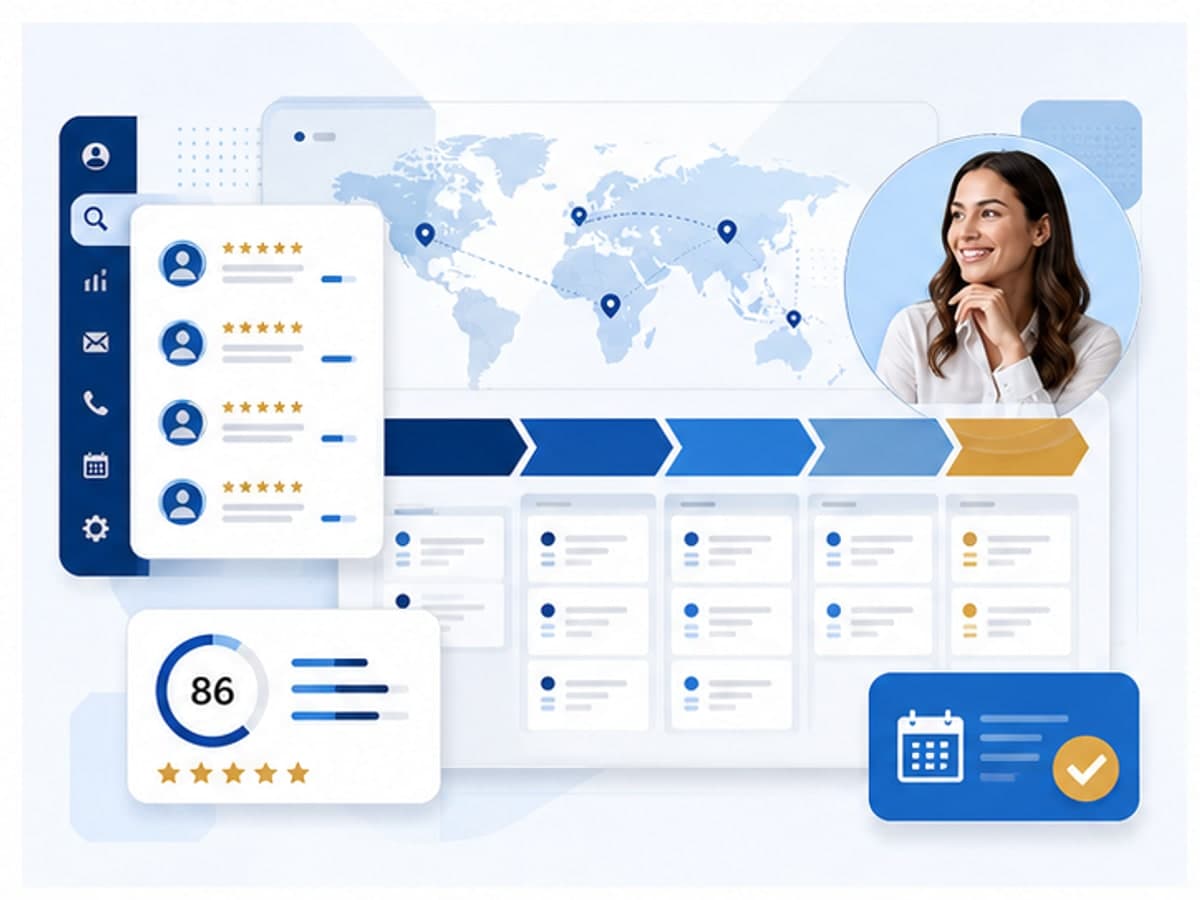
Weight the categories that matter to your program: relevant experience, operations, talent, technology, security, compliance, delivery resilience, implementation, governance, cultural fit, references, and total cost. Score evidence, not promises, and record material risks beside the numerical result.
The questions that separate providers fastest
Most evaluation criteria produce the same confident answer from every bidder. A small number of questions produce genuinely different answers, and asking them early saves weeks of undifferentiated proposals.
- "Walk me through a program you lost, and why." Every provider has lost accounts. One that cannot describe a loss specifically is either new or not being straight with you. The quality of the post-mortem tells you how the organisation learns.
- "Who is the operations leader on this account, how many other accounts do they carry, and can I meet them today?" Sales teams are interchangeable; the operations leader determines your outcome. Reluctance here is the single most reliable warning sign in the process.
- "What is tenure on the team that would serve us, not company-wide?" Company averages pool stable programs with volatile ones. You are buying one team.
- "Show me a quality scorecard from a live account, redacted." A provider with a real quality system can do this in minutes. One that cannot is describing a system that exists in the proposal.
- "What would you refuse to do for us?" A provider that agrees to everything in the sales cycle will agree to everything after signature and deliver a subset. A provider that pushes back on an unrealistic service level is showing you how it will behave under pressure.
- "What do you need from us to succeed?" The best answers are specific and slightly uncomfortable — a named internal owner, documented escalation policy, access to subject-matter experts during nesting. A provider that claims to need nothing has not run a difficult program recently.
Reference calls that produce signal
Provider-supplied references are selected to be positive, and asking whether they are satisfied wastes the call. Structure it to surface texture instead:
- "What went wrong in the first ninety days?" Something always does. A reference who says nothing did is not describing a real implementation.
- "How did they behave when they missed a target?" Recovery behaviour is the most transferable predictor of your own experience, and it is invisible in a proposal.
- "How much of your own time does the program consume each week?" Calibrates the internal ownership cost you should budget.
- "What do you wish you had specified in the contract?" This question produces the most useful answer in the entire evaluation, reliably.
- "Has your account leadership changed, and what happened when it did?" Turnover on the provider side is the most common cause of a good program quietly degrading.
Ask for one reference the provider did not select — a client in your industry from their public list. Refusal is informative; agreement even more so.
Scoring evidence rather than promises
A weighted scorecard is only as good as the discipline behind what earns a point. The rule that makes it work: a claim scores nothing until it is evidenced. "We have robust quality management" is zero. A redacted scorecard, a calibration schedule and a root-cause analysis from a live account is full marks. Applied consistently, this single rule reorders most shortlists, because the providers that present best are not always the ones that operate best.
Record risks alongside scores rather than folding them into the number. A provider can be the strongest on capability and still carry a concentration risk, a key-person dependency or a delivery-location exposure that belongs in front of the decision-maker rather than averaged away inside it.
Contract terms worth more than the rate
Commercial negotiation focuses on price, but several non-price terms have larger long-run value:
- Named key personnel with notice obligations if they change. Without this, the leadership demonstrated during evaluation is not the leadership you receive.
- A defined ramp and de-ramp mechanism with agreed notice periods and costs in both directions.
- Benchmarking or rate review at defined intervals on multi-year terms, so a competitive rate stays competitive.
- Data return and transition assistance specified concretely — formats, timelines, obligations — not as a general commitment to cooperate.
- Subcontracting restrictions, so work cannot move to an undisclosed party or location without consent.
- Continuous improvement obligations tied to review cadence, so optimisation is contractual rather than aspirational.
How long the process should take
A thorough selection for a program of meaningful size runs roughly three to four months from scope definition to signature, plus the pilot. Compressing it below that does not usually save time; it moves the discovery work to after signature, where it is far more expensive and no longer leverageable in negotiation.
The stages that get cut under pressure are always the same three — reference calls, the security review, and the pilot — and they are the three that carry the most information per hour invested. If the timeline genuinely cannot accommodate them, the honest move is to narrow the initial scope rather than to shorten the diligence on a wide one.
Matching provider size to your program
The instinct to shortlist the largest available provider is understandable and often wrong. Provider scale is not a quality signal on its own; what matters is where your program sits within that provider's portfolio.
A program that is small relative to a very large provider gets standardised processes, deep resources and genuine continuity — and competes for leadership attention with accounts many times its size. When capacity is tight or a crisis hits elsewhere, the allocation of the best supervisors and the most experienced agents will not favour you.
The same program at a mid-sized provider is material to that provider's revenue. You get senior attention, willingness to adapt process to your requirements, and a partner with an obvious commercial interest in your success. The trade is thinner bench depth, more key-person dependency and less capacity to absorb a sudden multiple of your volume.
Neither is better in the abstract. The useful question is what share of the provider's revenue your program would represent, and what that implies about attention and leverage in both directions. Ask it directly — providers answer it more candidly than buyers expect, because it is a question a serious buyer asks.
Then ask the follow-up that matters more: which named individuals would work on your account, and what else do they carry. Scale delivers a bench; you are served by a team.
How selection processes actually go wrong
The failure modes are consistent enough to be worth naming, because each is easier to avoid than to correct:
- Evaluating on the proposal rather than the operation. Proposals are written by people who will not run your program. Weight what you observed — the operations leader, the live scorecard, the reference call — above what you read.
- Letting procurement own the scorecard weights. Cost is one criterion among a dozen, and weighting it as though it were half guarantees the cheapest bid wins whatever else the evidence says.
- Skipping the pilot because of timeline pressure. The pilot is the only part of the process that tests reality. Cutting it to save six weeks routinely costs a year.
- Defining scope after selection. Providers priced different work, the comparison was meaningless, and the winner now has a legitimate claim to reprice.
- No internal owner named before signature. The most reliable predictor of a failed program, and the easiest to fix.
Use a pilot to confirm the decision
A limited pilot tests hiring, training, systems, reporting, quality, and working relationships with controlled risk. Define the baseline and pass criteria before launch so expansion is based on measurable evidence.
Frequently asked questions
What is the most important factor when choosing a BPO provider?
Relevant operating capability is the foundation: the provider must understand the work, customers, systems, controls, demand, and measures required for your program.
How many BPO companies should receive an RFP?
A focused shortlist of three to five qualified providers usually creates enough comparison without making due diligence and proposal evaluation unmanageable.
What should a BPO service level agreement include?
Include clearly defined measures, data sources, targets, exclusions, reporting periods, responsibilities, escalation, corrective action, and remedies.
How long should a BPO pilot run?
It should run long enough to complete hiring and training, reach steady operations, and observe representative demand. The right duration varies by complexity and volume.
Should price determine the final choice?
Price matters, but the best decision considers total cost, expected performance, implementation risk, security, scalability, and the provider’s ability to improve the process.
Choosing and scoping a partner
Keep reading
The rest of this cluster, for the question you are actually working through.
- Call Center RFP Guide: What to Include and How to Score Vendors
- How to Evaluate Customer Service Outsourcing Companies
- How to Outsource Customer Service: The Process, Step by Step
- Benefits of Outsourcing Call Center Services (and When It's the Wrong Move)
- In-House vs. Outsourced Customer Service: Costs, Pros, and Cons
- Call Center Outsourcing Cost in 2026: A Practical Pricing Guide

Related Services
Start here
What Is BPO? The Complete Guide
What business process outsourcing means, the services it covers, what it costs and how to choose a BPO company.