
When outsourcing telemarketing beats building an internal team, how programs are priced, the compliance obligations that stay with you, and how to evaluate providers on more than hourly rate.
What you are actually buying
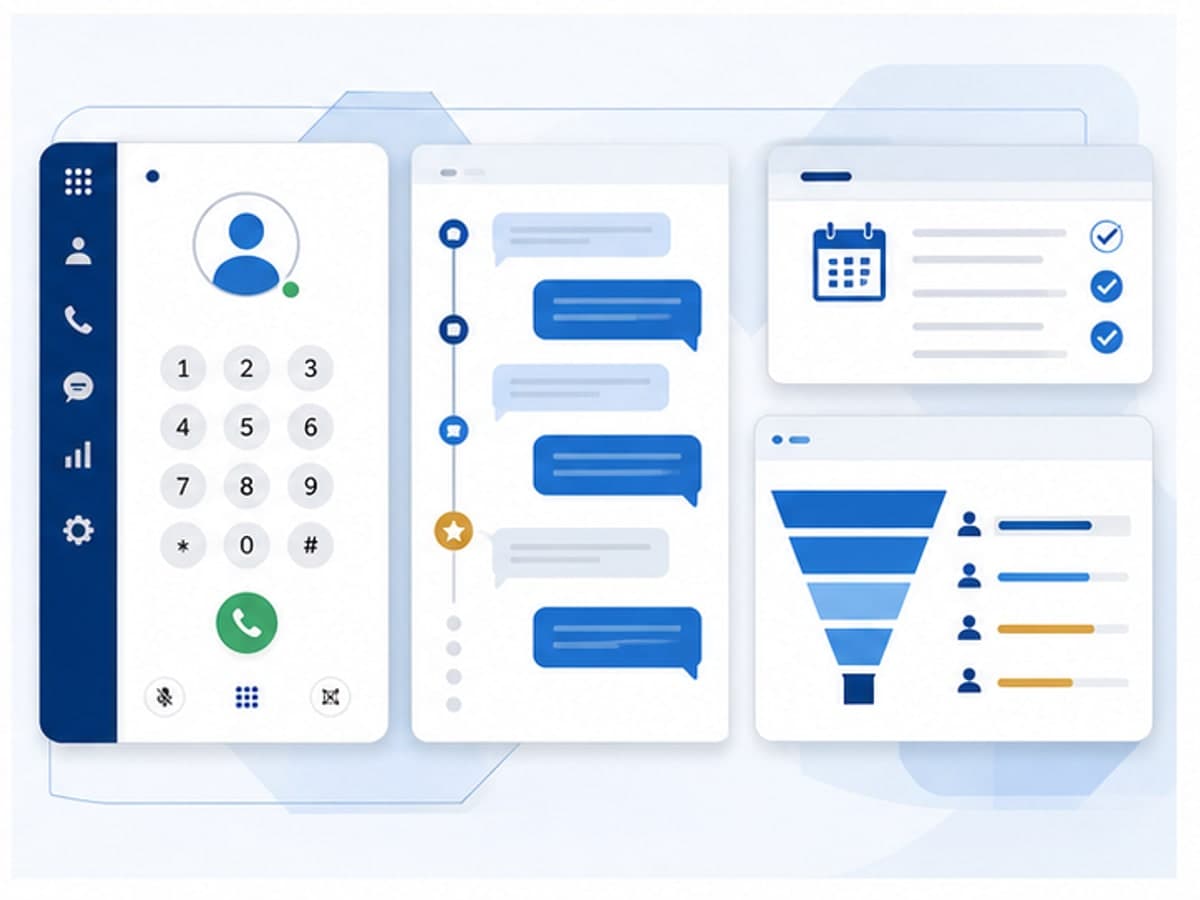
Telemarketing outsourcing gives you a trained calling team, dialer and CRM infrastructure, compliance controls, and management structure — without recruiting, equipping, or supervising any of it yourself. For most organizations the appeal is not purely cost; it is the ability to start a program in weeks rather than months.
Outsourced telemarketing covers both directions of work: outbound sales, lead qualification, appointment setting, renewals, win-back, collections support, and surveys; inbound order taking, response handling for advertising campaigns, and enquiry capture.
Outsource or build?
Building internally means recruitment, salary and commission, telephony and dialer infrastructure, list and data subscriptions, compliance tooling, training, and management — in a role with famously high turnover. Ramp to productivity is measured in months, and a meaningful proportion of hires leave before reaching it.
Outsourcing tends to win when:
- You are testing a market or channel and cannot yet justify permanent headcount
- Volume is campaign-driven or seasonal rather than steady year-round
- You need compliance infrastructure you do not currently have
- Your sales team is spending selling time on dialing
- You need to be live in weeks, not next quarter
Building internally tends to win when the conversation requires deep product or regulatory expertise, when volume is steady and predictable enough to keep a team fully utilized, or when calling is so core to your business that the capability itself is a competitive asset.

How programs are priced
Four structures are common, often in combination:
- Hourly or per-agent — you buy capacity. Best for sustained programs and complex conversations where product knowledge compounds.
- Per contact or per lead — payment tied to a defined outcome. Aligns incentives, but only works when the definition is genuinely unambiguous.
- Per appointment or per sale — pure performance. Providers price in their risk, so the unit cost is higher and the quality definition has to be watertight.
- Hybrid — a base fee covering capacity plus a performance component. The most common structure for anything running beyond a single campaign.
What changes the number: call complexity, agent skill and language requirements, delivery location, dedicated versus shared agents, hours of coverage, list quality, compliance requirements, and whether technology and implementation are included or billed separately. Ask for every one-time and recurring fee separated on a single comparison sheet.
Compliance stays with you
Telemarketing is heavily regulated, and the obligations generally attach to the organization on whose behalf the call is made. Consent, do-not-call suppression, calling hours by the consumer's time zone, caller identification, recording consent, and opt-out handling all remain your exposure regardless of who dials.
Make compliance a qualifying question, not a checkbox: how is consent verified and recorded, how often are suppression lists refreshed, how are calling hours enforced across time zones, who reviews scripts, and what audit trail is available to you on request?
Evaluating providers
- Relevant experience — comparable industry, offer type, and conversation complexity, with references you can actually call
- Agent model — dedicated or shared, and what tenure looks like on the accounts you will be staffed from
- Attrition on comparable programs, not the company-wide figure
- Compliance controls and audit trail
- Technology — dialer, CRM integration, recording, quality monitoring, and reporting you can see live
- Reporting — outcome metrics, not just dials and talk time
- Quality monitoring — how calls are scored, how often, and what happens when scores drop
Measure outcomes, not activity
Dials and talk time tell you the team is working. They do not tell you the program is worth running. Track contact rate, conversion, cost per acquisition or per qualified lead, revenue attributed, and — critically — retention of what the channel acquires.
Give the program a fair test. Messaging needs iteration, lists need correction, and agents need to learn your offer and objections. Judge results after a full cycle from steady-state operation, not on the first weeks of ramp.
Ramp, and the first ninety days
Outbound programs are cancelled early more often than they fail, usually on a number that was never going to be good yet. A realistic shape is worth agreeing before launch. Weeks one to three are calibration: agents are working real records, the qualification bar is being argued about, and conversion is poor. That argument is the work — it is how a written definition becomes an operating one. Weeks four to eight are where contact rate, attempts per record and talk time should stabilise, and those are the numbers to hold the program to at that stage. Outcome metrics only become meaningful from around week nine, once enough handoffs exist to judge and feedback has run several cycles.
Write down in advance which metric governs which window. Programs that skip this get judged on end-state conversion in week four, cancelled in week five, and rebuilt six months later at the same starting point.
Data, CRM and the feedback loop
The single biggest determinant of an outbound program's second quarter is whether the team can see what happened to the work it produced in the first. A team that books meetings or generates leads and never learns which converted is optimising blind, and will drift toward whatever is easiest to produce rather than what is worth producing.
That requires three things. Dispositions must be consistent and enforced, because every downstream metric is computed from them and inconsistent dispositions make the program unmanageable exactly when it needs adjusting. Outcomes must flow back — at minimum, which records became opportunities and which were rejected, with a reason. And the rejection path must be low effort: a rejection that takes four clicks and a written justification will not be used, and you will lose the quality signal that makes the loop work.
Knowing when to stop
Not every outbound program should be rescued, and the discipline to stop one is worth as much as the discipline to run it. The signals that a program is structurally wrong rather than immature: contact rate is at target but qualified outcomes are not, which usually means the list or the offer rather than the calling; results were achieved early and have decayed steadily, which often means the addressable list is exhausted; or rejection reasons cluster on fit rather than on quality, which means the targeting definition is wrong.
None of these is fixed by more dials or a new script. Each points at the list, the offer or the definition — and each is worth a deliberate pause to rebuild rather than another quarter of activity. Where the problem is the fit between offer and audience, a different channel mix is often the answer; our lead generation services and lead generation guide cover the alternatives.
Frequently asked questions
How much does outsourced telemarketing cost?
It depends on call complexity, agent skill, delivery location, dedicated versus shared teams, coverage hours, and compliance requirements. Ask every provider to separate one-time and recurring fees on the same template so quotes are comparable.
Should we pay per hour or per result?
Hourly suits sustained programs and complex conversations. Per-result suits well-defined, high-volume outcomes. Hybrid structures are the most common for anything running beyond a single campaign.
Who carries the compliance risk?
Generally the organization on whose behalf the call is made. Consent, suppression lists, calling hours, disclosure, and opt-out handling remain your exposure regardless of who places the call.
How long before an outsourced telemarketing program produces results?
Expect ramp covering training, messaging iteration, and list refinement before results are representative. Judge the program after a full cycle from steady-state operation rather than on the first weeks.
What should we ask providers that most buyers do not?
Attrition on comparable programs rather than the company-wide average, how suppression lists are refreshed, and what cost per acquisition looks like rather than cost per hour.
By service line
Keep reading
The rest of this cluster, for the question you are actually working through.
- Outsourced Lead Generation: How It Works and When It Pays Off
- Inbound Lead Generation Services: Turning Demand You Already Have into Pipeline
- Outsourced Sales Development: Building Pipeline Without Building a Team
- B2C Telemarketing: How Consumer Outbound Programs Actually Work
- Technical Support Outsourcing: A Complete Guide for 2026
- Outsourcing Live Chat Support: A Practical Guide
- Email Support Outsourcing: How to Scale Without Losing Quality
- Back Office Outsourcing: What to Transfer and What to Keep
- Multilingual Customer Support: Staffing It Properly, Not Translating It
- B2B Appointment Setting: Filling a Complex Pipeline Without Burning the Brand


Hiring agents
Hiring for the Seat Rather Than Buying a Program?
The same operation, scoped as a role you are staffing: who employs the agent, who supervises them, and what standard they are held to.
- Cold Calling Agents
- Real Estate Callers
- Call Center Agents
- Customer Service Agents
- Chat Support Agents
- Appointment Setters
- Delivery App Support
- Cold Calling Virtual Assistant
- Inbound Call Agents
- Bilingual Agents
- Rideshare Support Agents
- Ecommerce Support Agents
- Technical Support Agents
- Insurance Agency Call Agents
- Medical Front Desk Agents
- Dedicated vs Shared Agents
- SDRs
- Telemarketers
- Outbound Calling Agents
- Sales Reps
- Virtual Receptionist